
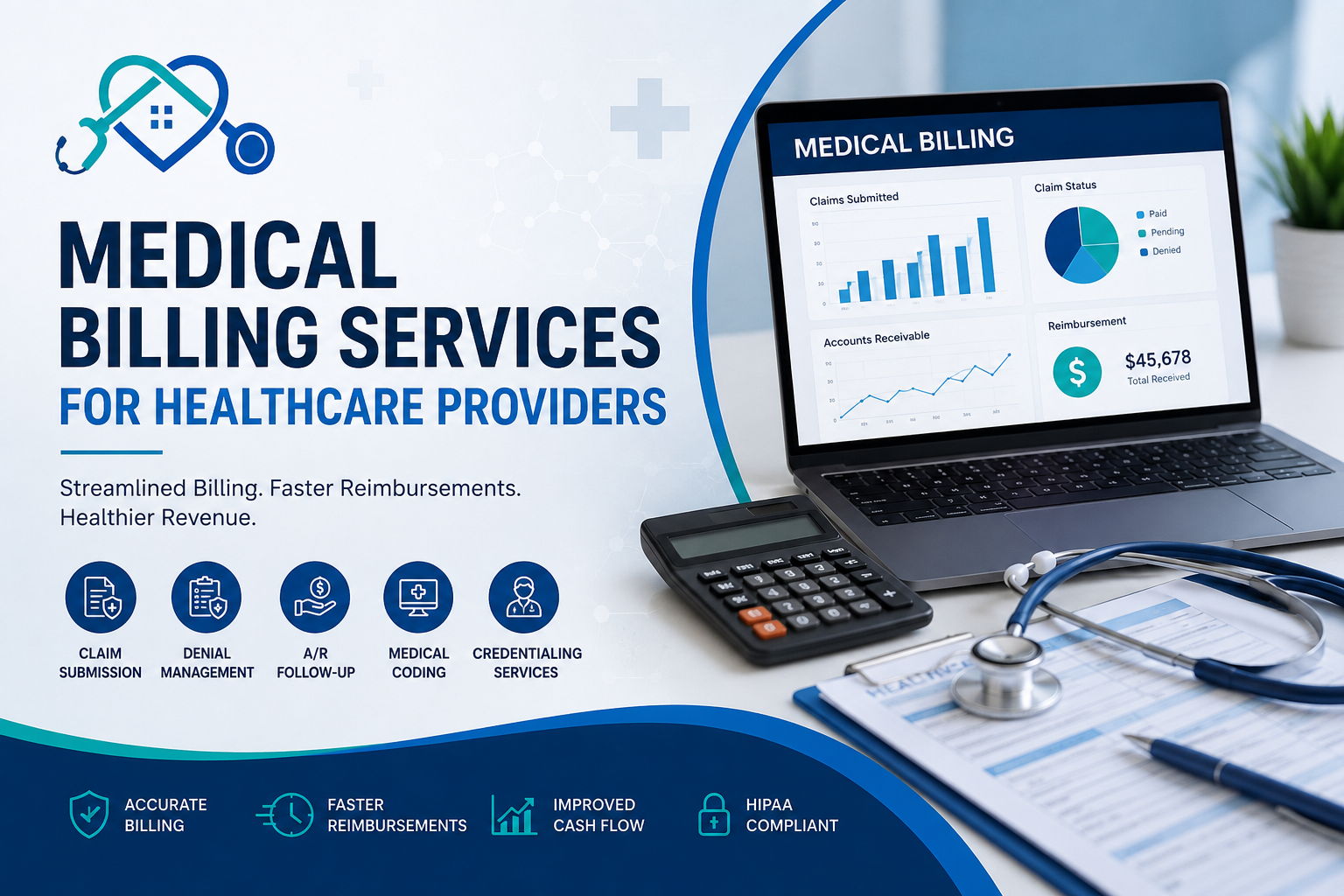
7 Powerful Benefits of Medical Billing Services for Healthcare Providers
Managing a healthcare practice involves more than treating patients. Healthcare providers also need to handle insurance claims, medical coding, eligibility verification, payment posting, claim denials, and accounts receivable. When billing processes are not managed properly, practices can experience delayed payments, rejected claims, and unnecessary administrative work.
Medical billing services help healthcare providers manage these financial processes more efficiently. A professional medical billing company can handle different stages of the revenue cycle, from insurance verification and claim submission to payment posting and denial management.
What Are Medical Billing Services?
Medical billing services involve managing the billing and insurance processes required to receive reimbursement for healthcare services. Medical billing professionals prepare and submit claims to insurance companies, monitor claim status, address denials, and follow up on unpaid balances.
A complete medical billing process may include:
- Patient registration
- Insurance eligibility verification
- Authorization and benefits verification
- Medical coding
- Charge entry
- Claim submission
- Payment posting
- Denial management
- Accounts receivable follow-up
- Insurance payer communication
The goal is to create an efficient billing workflow that helps healthcare providers receive appropriate reimbursement for the services they provide.
Why Are Medical Billing Services Important?
Accurate billing plays an important role in the financial health of a medical practice. Even small errors in patient information, coding, documentation, or insurance details can lead to claim rejections or denials.
Professional medical billing services can help healthcare providers:
- Reduce billing errors
- Improve claim accuracy
- Minimize avoidable denials
- Follow up on unpaid claims
- Improve accounts receivable management
- Reduce administrative workload
- Support faster reimbursement
- Maintain organized billing records
By outsourcing billing responsibilities, providers can spend more time focusing on patient care and practice operations.
How Does the Medical Billing Process Work?
The medical billing process involves several stages. Each stage needs to be completed accurately to help prevent unnecessary delays.
1. Patient Registration
The process starts with collecting accurate patient information, including demographic details and insurance information.
Incorrect information at registration can create problems during claim processing.
2. Insurance Eligibility Verification
The patient’s insurance coverage is checked to determine whether the policy is active and what benefits may apply to the planned healthcare services.
3. Medical Coding
Healthcare diagnoses and procedures are translated into standardized medical codes. Common coding systems include ICD-10, CPT, and HCPCS.
Accurate coding is essential because coding errors can affect claim processing and reimbursement.
4. Claim Preparation and Submission
After coding and charge entry are completed, the claim is prepared and submitted to the appropriate insurance payer.
Claims should be reviewed for missing or incorrect information before submission.
5. Payment Posting
When an insurance company processes a claim, the payment and adjustments are recorded in the practice’s billing system.
6. Denial Management
If an insurance claim is denied, the billing team reviews the denial reason and determines what action is required. Depending on the situation, the claim may need correction, additional documentation, or an appeal.
7. Accounts Receivable Follow-Up
Unpaid claims are monitored through A/R follow-up. The billing team communicates with insurance companies and tracks outstanding balances to help recover eligible payments.
Key Medical Billing Services for Healthcare Providers
Healthcare providers may need different types of billing support depending on their specialty and practice size.
Medical Billing Services
Medical billing professionals manage claim submission, payment posting, insurance follow-up, and other billing activities to support an efficient revenue cycle.
Medical Coding Services
Medical coding services help ensure that diagnoses, procedures, and healthcare services are represented with appropriate codes based on available documentation.
Medical Credentialing Services
Credentialing services help healthcare providers with insurance network enrollment and credential maintenance. Proper credentialing can help providers participate in insurance networks and avoid reimbursement issues related to enrollment.
Denial Management Services
Denial management focuses on identifying the reasons claims are denied, correcting eligible issues, submitting necessary information, and tracking claims through resolution.
A/R Follow-Up Services
Accounts receivable services focus on outstanding insurance claims and balances. Regular follow-up helps practices identify unpaid claims and address payment delays.
Insurance Verification Services
Insurance verification helps confirm eligibility and benefits before healthcare services are provided. This can help practices identify coverage issues earlier in the billing process.
Telehealth Billing Services
Telehealth billing requires appropriate documentation, coding, and payer-specific requirements. Specialized telehealth billing support can help providers manage claims associated with virtual healthcare services.
Out-of-Network Billing Services
Providers who treat patients outside insurance networks may face additional reimbursement and payer-related challenges. Out-of-network billing support can help practices manage these claims and reimbursement processes.
Benefits of Outsourcing Medical Billing
Many healthcare providers choose to outsource their billing instead of managing every billing task internally.
Reduce Administrative Work
Medical billing can require significant time and attention. Outsourcing allows internal staff to focus on patients and other practice responsibilities.
Improve Billing Accuracy
Experienced billing professionals can review claims and billing information to identify potential errors before they result in unnecessary delays.
Improve Claim Follow-Up
A dedicated billing team can monitor claim status and follow up with insurance companies when payments are delayed.
Manage Denials More Effectively
Denial management helps practices understand why claims are being denied and address recurring problems.
Improve Revenue Cycle Management
Professional billing support can help connect different stages of the revenue cycle, including eligibility verification, coding, claims, payment posting, and A/R follow-up.
Common Causes of Medical Claim Denials
Claim denials can occur for many reasons. Some common causes include:
- Incorrect patient information
- Inactive insurance coverage
- Missing authorization
- Incorrect medical coding
- Missing documentation
- Duplicate claims
- Incorrect payer information
- Timely filing issues
- Coverage limitations
- Incorrect modifiers
Identifying the most common denial reasons can help healthcare practices improve their billing processes and reduce avoidable errors.
How Can Healthcare Providers Reduce Claim Denials?
Reducing claim denials requires attention throughout the billing process.
Verify Insurance Information
Insurance eligibility and benefits should be checked before services whenever possible.
Maintain Accurate Patient Records
Patient demographic and insurance information should be reviewed regularly and updated when necessary.
Use Accurate Medical Coding
Medical codes should accurately reflect the services and diagnoses documented in the patient’s medical record.
Review Claims Before Submission
A claim review process can help identify missing information, coding errors, and other issues before claims reach the payer.
Monitor Denial Trends
Tracking denial reasons can help practices identify recurring problems and improve their billing workflows.
Follow Up on Unpaid Claims
Unpaid claims should be monitored and followed up on consistently to prevent outstanding balances from remaining unresolved.
Medical Billing for Different Specialties
Medical billing requirements can vary depending on the healthcare specialty. Different specialties may involve different procedures, documentation requirements, coding rules, and payer guidelines.
Medical billing services can support specialties such as:
- Endocrinology
- Pediatrics
- Podiatry
- Allergy and Immunology
- Geriatrics
- Acupuncture
- Laboratory and Pathology
- Orthopedics
- Behavioral Health
- Emergency Medicine
- Hospitals and healthcare facilities
Specialty-focused billing support can help practices manage billing requirements that are specific to their services.
Medical Billing vs. In-House Billing
Healthcare practices generally have the option to manage billing internally or outsource it to a professional medical billing company.
With in-house billing, the practice is responsible for hiring and training billing staff, managing software, monitoring claims, handling denials, and maintaining the billing workflow.
With outsourced medical billing, an external billing company manages some or all of these responsibilities on behalf of the practice.
The right approach depends on factors such as practice size, staffing, billing volume, specialty, technology, and financial goals.
How to Choose a Medical Billing Company
Choosing the right billing partner is an important decision for any healthcare practice.
Before selecting a medical billing company, consider:
Experience and Expertise
Look for a company with experience in medical billing and, ideally, your specific healthcare specialty.
Range of Services
Determine whether the company offers the services your practice needs, such as coding, credentialing, denial management, A/R follow-up, and insurance verification.
Communication
Clear communication is important when dealing with claims, denials, payments, and other billing issues.
Reporting
Regular reports can help healthcare providers understand claim activity, outstanding balances, denials, and other revenue cycle information.
Compliance
Medical billing involves sensitive healthcare information. Providers should understand how a billing company protects patient information and follows applicable healthcare and privacy requirements.
Why Choose MEDI BILL SERVICES?
MEDI BILL SERVICES provides medical billing and revenue cycle management solutions for healthcare providers across the United States.
The company offers a range of services, including:
- Medical Billing Services
- Medical Coding Services
- Medical Credentialing Services
- Denial Management
- A/R Follow-Up
- Insurance Verification and Benefits Checks
- Telehealth Billing
- Out-of-Network Billing
- Hospital Medical Billing
- Behavioral Health Billing
- Workers’ Compensation Billing
MEDI BILL SERVICES also supports multiple healthcare specialties and provides statewise billing solutions.
The goal is to help healthcare providers simplify billing processes, reduce administrative pressure, manage claims more effectively, and maintain a more efficient revenue cycle.
Frequently Asked Questions
1. What are medical billing services?
Medical billing services involve managing the financial and insurance-related processes associated with healthcare services. This can include claim submission, payment posting, denial management, insurance follow-up, and accounts receivable management.
2. Why should healthcare providers use medical billing services?
Professional medical billing services can help reduce administrative workload, improve billing accuracy, manage claim denials, and follow up on unpaid claims.
3. What is included in medical billing?
Medical billing may include insurance verification, charge entry, claim submission, payment posting, denial management, A/R follow-up, and payer communication.
4. What is the difference between medical billing and medical coding?
Medical coding involves converting diagnoses and healthcare services into standardized codes. Medical billing uses coded information to prepare and manage claims for reimbursement.
5. How can medical billing services help reduce claim denials?
Billing professionals can verify insurance information, review claims, use accurate coding, identify missing information, and analyze denial reasons to help reduce avoidable claim problems.
6. What is denial management?
Denial management is the process of reviewing denied claims, identifying the reason for denial, correcting eligible issues, submitting additional information or appeals when appropriate, and tracking the claim toward resolution.
7. What is A/R follow-up in medical billing?
A/R follow-up means monitoring unpaid claims and outstanding balances and contacting insurance payers to address delayed or unresolved payments.
8. Why is insurance verification important?
Insurance verification helps confirm a patient’s coverage and benefits. It can help healthcare providers identify potential coverage issues before services are provided.
9. Can medical billing companies handle telehealth billing?
Yes. Medical billing companies may provide specialized telehealth billing support, including claim preparation, coding, and payer-related billing processes.
10. Do medical billing companies work with different medical specialties?
Yes. Many medical billing companies provide services for multiple specialties, including pediatrics, orthopedics, endocrinology, podiatry, behavioral health, geriatrics, and laboratory and pathology services.
11. How does medical billing affect healthcare practice revenue?
Accurate and organized billing can help practices submit claims correctly, manage denials, follow up on unpaid claims, and improve the overall efficiency of the revenue cycle.
12. Is outsourcing medical billing better than in-house billing?
There is no single answer for every practice. Outsourcing can provide access to specialized billing expertise and reduce administrative workload, while in-house billing gives practices direct control over their billing team and processes. The best option depends on the practice’s specific needs.
Conclusion
Effective medical billing is an important part of maintaining a financially healthy healthcare practice. From insurance verification and medical coding to claim submission, denial management, payment posting, and A/R follow-up, every stage of the revenue cycle can influence reimbursement.
For healthcare providers looking to reduce administrative workload and improve billing efficiency, professional medical billing services can provide valuable support.
MEDI BILL SERVICES offers comprehensive medical billing and revenue cycle management solutions for healthcare providers across the USA, helping practices manage their billing needs while allowing them to focus more on patient care.