Revenue Cycle Management in Healthcare
Revenue cycle management (RCM) is an essential part of running a successful healthcare practice. It covers the financial processes involved in patient registration, insurance verification, medical billing, claim submission, payment collection, and outstanding balance management.
An organized revenue cycle helps healthcare providers monitor payments, identify billing issues, and maintain accurate financial records. Without an effective process, claims may be delayed, denials may go unresolved, and administrative costs may increase.
In this guide, we will explain how revenue cycle management works, why it matters, the challenges healthcare providers face, and the best practices for improving financial workflows.
What Is Revenue Cycle Management?
Revenue cycle management is the process healthcare organizations use to manage the financial side of patient care, from the initial appointment through final payment.
It connects administrative, clinical, and billing activities to help ensure that services are documented correctly, claims are submitted according to payer requirements, and payments are recorded accurately.
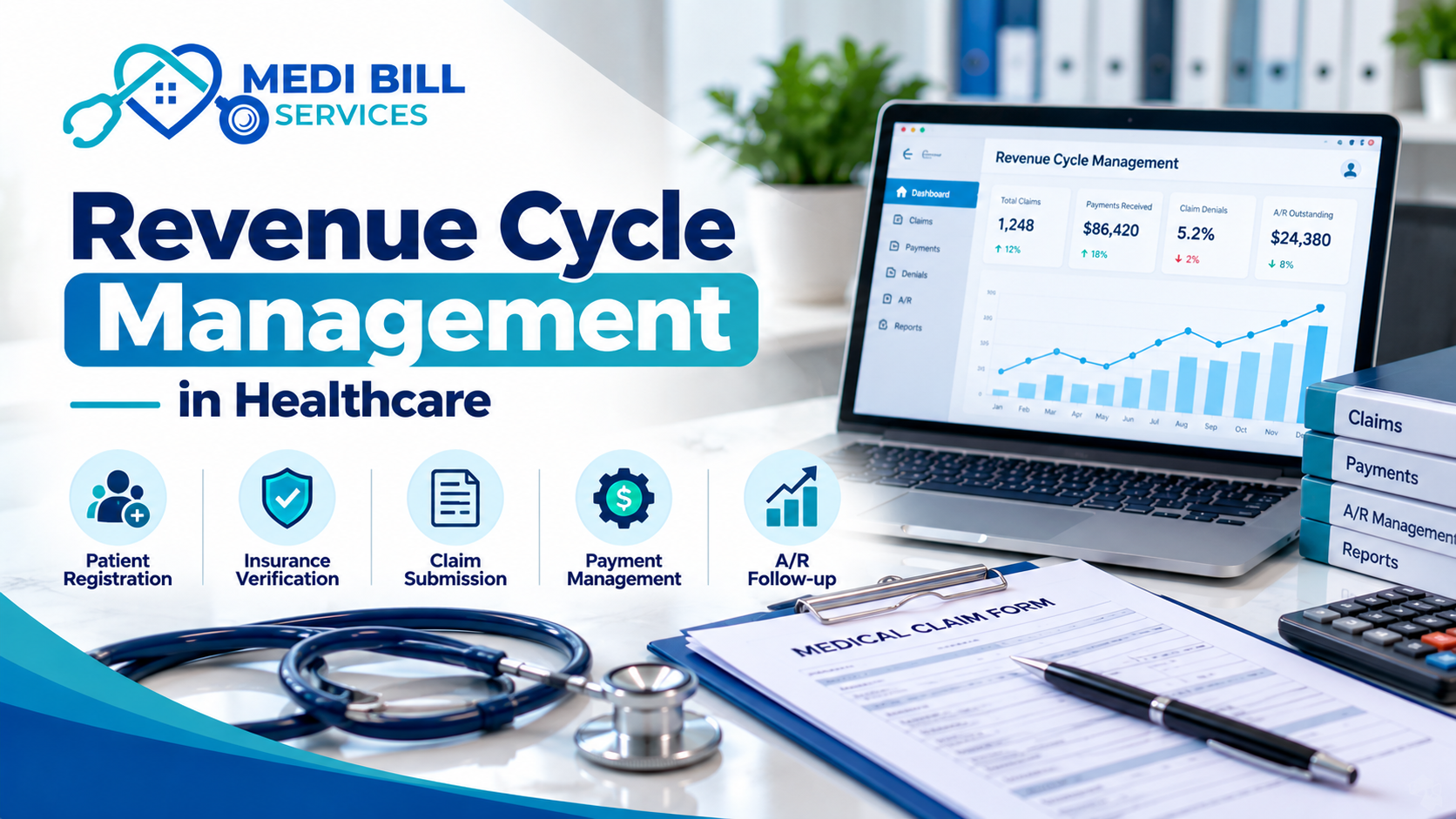
A typical revenue cycle includes patient registration, insurance verification, medical coding, claim submission, payment posting, denial management, and accounts receivable follow-up.
When these activities work together effectively, healthcare providers gain better visibility into their financial operations.
Why Is Revenue Cycle Management Important?
Healthcare providers need an organized financial process to manage operational expenses and maintain reliable billing records. Effective revenue cycle management can help practices address several important areas.
Improved Payment Tracking
Tracking submitted claims and outstanding balances helps providers understand which payments have been received and which require further attention.
A clear tracking process also makes it easier to identify delayed claims and prioritize follow-up activities.
Fewer Preventable Billing Errors
Incorrect patient details, incomplete documentation, and coding errors can create unnecessary claim processing problems.
Reviewing information at each stage of the revenue cycle helps identify errors before they lead to additional administrative work.
Better Accounts Receivable Management
Accounts receivable represents payments owed to a healthcare practice by insurance companies or patients.
Regular reviews help billing teams identify overdue balances, investigate payment delays, and determine the appropriate next steps for unresolved accounts.
More Efficient Administrative Workflows
When staff members follow consistent procedures, billing tasks are easier to organize and monitor.
Clearly defined responsibilities can help reduce duplicated work, missed follow-ups, and confusion about claim status.
Better Financial Reporting
Revenue cycle reports provide information about claim submissions, denials, payment activity, and outstanding balances.
Healthcare managers can use these insights to identify recurring problems and make informed decisions about workflow improvements.
Key Stages of Revenue Cycle Management
Understanding each stage helps healthcare providers identify where billing problems may occur.
Patient Registration
The revenue cycle begins when a patient schedules an appointment or registers for healthcare services.
Accurate demographic information, contact details, and insurance information are important for preparing claims correctly.
Registration errors can affect later stages of the billing process, so patient information should be reviewed and updated when necessary.
Insurance Eligibility Verification
Insurance verification helps determine whether a patient’s policy is active and identifies relevant coverage details.
Depending on the payer and service, additional requirements may include referrals, prior authorization, or specific documentation.
Verifying these details before services are provided can help identify potential billing issues early. However, eligibility verification does not guarantee claim payment.
Clinical Documentation and Medical Coding
Healthcare providers document the services delivered during a patient visit.
Medical coding translates relevant diagnoses and procedures into standardized codes based on the clinical documentation and applicable guidelines.
Accurate documentation and coding help support the information submitted to insurance payers.
Charge Entry and Claim Submission
Once the necessary information is available, the billing team records applicable charges and prepares the claim.
Before submission, the claim should be checked for missing information, coding errors, authorization issues, and payer-specific requirements.
Claims are then submitted through the appropriate channel, often using an electronic claims system.
Claim Processing and Denial Management
After submission, the payer reviews the claim and determines how it will be processed.
Some claims may be paid, while others may be rejected, denied, or returned for additional information.
The billing team should review payer responses, correct identified problems, and submit appeals when appropriate.
Payment Posting
Payment posting involves recording insurance payments, contractual adjustments, and other relevant transactions in the practice’s billing system.
Accurate posting helps providers compare expected reimbursement with the amounts received and identify remaining balances.
Patient Billing and Collections
After insurance processing, a patient may have a remaining financial responsibility under the terms of their coverage and applicable agreements.
Clear statements and accurate balance information help patients understand what they owe.
Practices should also maintain a consistent process for addressing patient billing questions and monitoring outstanding balances.
Common Revenue Cycle Management Challenges
Even well-organized healthcare practices may encounter problems that affect their financial workflows.
Inaccurate Patient Information
Incorrect demographic or insurance details can cause claims to be rejected or delayed.
Recommended approach: Establish a registration process that verifies patient information and updates records when details change.
Claim Denials
Claims may be denied because of coding errors, missing documentation, coverage restrictions, or authorization issues.
Recommended approach: Record denial reasons, investigate recurring patterns, and correct preventable problems in the billing workflow.
Delayed Claim Submission
Claims submitted late may take longer to process and could miss applicable filing deadlines.
Recommended approach: Establish a regular submission schedule and monitor claims that have not been acknowledged by the payer.
Unresolved Accounts Receivable
Outstanding claims may remain unpaid when follow-up is inconsistent or claim status is unclear.
Recommended approach: Review accounts receivable reports regularly and prioritize overdue claims based on age, value, and applicable deadlines.
Inconsistent Payment Posting
Incorrect or incomplete payment records can make it difficult to understand a practice’s financial position.
Recommended approach: Reconcile payment records with payer remittance information and investigate discrepancies promptly.
Limited Performance Visibility
Without useful reports, practice managers may struggle to identify the reasons behind delayed payments or recurring denials.
Recommended approach: Monitor consistent financial indicators and review performance trends regularly.
Best Practices for Effective Revenue Cycle Management
Healthcare organizations can improve their financial workflows by following a structured approach.
Verify Insurance Information Early
Confirm patient demographics, coverage details, and applicable authorization requirements before providing services whenever possible.
Early verification helps identify potential issues before claims are prepared.
Maintain Accurate Documentation
Clinical documentation should accurately describe the services provided and support the associated billing codes.
Complete records can reduce the need for additional information and support appropriate claim processing.
Submit Clean Claims Promptly
Review claims for completeness and accuracy before submission.
Check required fields, coding, charges, and payer-specific requirements. Submit claims within the applicable filing deadlines and monitor their status.
Monitor Denials and Rejections
Track the reasons claims are denied or rejected and determine the appropriate corrective action.
Reviewing patterns can reveal whether improvements are needed in registration, coding, documentation, or authorization procedures.
Review Accounts Receivable Regularly
Maintain a clear record of outstanding claims and patient balances.
Follow up on unresolved accounts consistently, paying particular attention to approaching deadlines and older balances.
Use Appropriate Billing Technology
Revenue cycle management software can help organize claims, record payments, track outstanding balances, and generate financial reports.
Select technology that fits the practice’s workflows, specialty, reporting needs, and security requirements.
Train Staff Continuously
Billing procedures and payer requirements can change over time.
Regular staff training helps maintain consistent processes and supports accurate claim preparation, follow-up, and documentation.
Protect Patient Data
Revenue cycle activities involve sensitive health and financial information.
Healthcare providers should implement suitable access controls, secure data handling procedures, staff training, and vendor oversight. US healthcare practices should assess their applicable HIPAA privacy and security responsibilities.
Revenue Cycle Management Metrics to Monitor
Tracking key performance indicators can help healthcare providers understand how effectively their revenue cycle is operating.
Clean claim rate: Measures the proportion of claims submitted without errors that prevent initial processing, based on the practice’s chosen definition.
Claim denial rate: Tracks the proportion of claims denied during a defined period. The calculation method should remain consistent when comparing results.
Days in accounts receivable: Estimates how long it takes a practice to collect outstanding payments.
Average time to payment: Measures the time between a defined billing event and receipt of payment.
Outstanding accounts receivable: Shows the amount of money still owed to the practice.
Collection performance: Helps assess how effectively the practice collects payments that are due.
These metrics should be reviewed together because payer mix, specialty, claim complexity, and reporting methods can influence results.
In-House vs. Outsourced Revenue Cycle Management
Healthcare providers can manage revenue cycle activities internally or work with an external billing company.
In-House Management
An in-house team handles billing and related financial tasks within the healthcare organization.
This approach can provide direct oversight and close communication between clinical and administrative staff. However, it also requires appropriate staffing, training, technology, and quality-control procedures.
Outsourced Management
An external company manages some or all agreed revenue cycle activities.
Depending on the service agreement, support may include claim submission, payment posting, denial follow-up, accounts receivable management, and reporting.
Outsourcing may help practices access specialized billing support and structured workflows. However, providers should assess service quality, pricing, communication, data security, and reporting before selecting a partner.
The right approach depends on the practice’s size, staffing, budget, specialty, and operational requirements.
How Medi Bill Services Can Support Your Revenue Cycle
Medi Bill Services supports healthcare providers seeking assistance with medical billing and related revenue cycle activities.
Depending on the services selected, practices may seek support with claim processing, billing workflows, denial follow-up, and accounts receivable management.
An effective billing arrangement should begin with an understanding of the practice’s existing challenges, payer requirements, and financial reporting needs.
Explore the medical billing services page to learn more about available support. You can also visit the medical specialties page to review information relevant to different healthcare practices.
Conclusion
Revenue cycle management helps healthcare providers coordinate the financial activities associated with patient care. From registration and insurance verification to claim submission, payment posting, and accounts receivable follow-up, every stage contributes to an organized billing process.
By maintaining accurate records, reviewing claims carefully, tracking denials, and monitoring financial reports, healthcare practices can identify problems and improve their revenue cycle workflows.
Whether a practice manages billing internally or works with an external provider, consistent procedures and regular performance reviews remain essential for effective financial management.
Frequently Asked Questions
What is revenue cycle management in healthcare?
Revenue cycle management is the process of managing healthcare finances from patient registration and insurance verification through claim submission, payment collection, and resolution of outstanding balances.
Why is revenue cycle management important for medical practices?
It helps practices organize billing activities, monitor payments, identify claim problems, manage accounts receivable, and maintain accurate financial records.
How can healthcare providers improve revenue cycle management?
Providers can verify insurance information, maintain complete documentation, submit accurate claims promptly, monitor denials, follow up on outstanding balances, and review financial performance regularly.
What is the difference between medical billing and revenue cycle management?
Medical billing focuses on preparing and managing claims and payments. Revenue cycle management covers the broader financial process, including registration, insurance verification, billing, reimbursement, and outstanding balance management.
Can outsourcing improve revenue cycle management?
Outsourcing may provide access to specialized billing support and structured follow-up processes. Results depend on the provider’s capabilities, the agreed services, communication, and the healthcare practice’s own workflows.