
Medical Revenue Cycle Management: A Complete Guide
Managing the financial side of a healthcare practice involves much more than sending invoices to insurance companies. Healthcare providers must collect accurate patient information, verify insurance coverage, document services, submit claims, track payments and resolve billing issues.
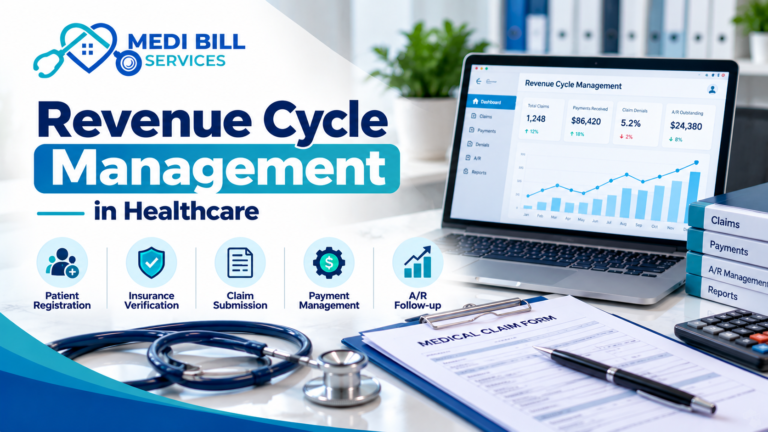
These activities form part of revenue cycle management (RCM), a process that helps healthcare organisations manage the financial journey from a patient’s appointment to the final payment for services provided.
An organised revenue cycle can help practices reduce administrative delays, identify billing problems and maintain better visibility over outstanding payments.
In this guide, we explain what medical revenue cycle management involves, the main stages of the process and practical ways healthcare providers can improve their billing workflows.
What Is Medical Revenue Cycle Management?
Medical revenue cycle management is the process of managing the financial and administrative activities associated with healthcare services. It begins when a patient schedules an appointment and continues through registration, insurance verification, claim submission, payment processing and the resolution of outstanding balances.
The exact process varies depending on the healthcare setting, payer requirements and services provided.
An effective RCM workflow helps ensure that patient information is accurate, claims are submitted correctly, payments are recorded properly and unresolved accounts receive appropriate follow-up.
Why Is Revenue Cycle Management Important?
Revenue cycle management plays an important role in the financial operations of medical practices, clinics and other healthcare organisations.
1. Supports Timely Payments
Accurate information and consistent claim follow-up can help reduce avoidable processing delays. Monitoring outstanding claims also makes it easier to identify accounts that require attention.
2. Helps Reduce Claim Denials
Errors in patient information, coding, documentation or authorisation can contribute to claim rejections and denials. A structured RCM process helps identify these issues and address recurring problems.
3. Improves Financial Visibility
Billing reports can help healthcare providers understand outstanding balances, payment trends and areas where the revenue cycle may be slowing down.
4. Reduces Administrative Work
Standard procedures and suitable billing systems can reduce repetitive tasks, support consistent documentation and help staff prioritise important follow-up activities.
5. Supports Better Patient Billing Communication
Clear processes for explaining charges, insurance responsibilities and outstanding balances can help patients understand their financial obligations.
The Main Stages of the Medical Revenue Cycle
Revenue cycle management includes several connected stages. Problems at an early stage can affect later steps, making consistency and accurate information important throughout the process.
Stage 1: Patient Registration
The revenue cycle usually begins when a patient books an appointment or registers for care.
Staff collect essential information such as the patient’s name, date of birth, contact details and relevant insurance information.
Incorrect or incomplete records can cause claim processing problems later.
Best practice: Establish a consistent registration process and verify key information before the appointment whenever possible.
Stage 2: Insurance Eligibility and Verification
Insurance verification helps establish whether coverage is active and whether the planned service may be subject to specific requirements.
Depending on the payer and service, the practice may need to check benefits, referrals, prior authorisation or other coverage conditions.
Verification does not guarantee payment, because final reimbursement depends on the policy, claim details and applicable payer rules.
Best practice: Verify eligibility and relevant requirements early, document the results and communicate potential financial responsibilities clearly.
Stage 3: Clinical Documentation
Healthcare providers document the services delivered, relevant diagnoses and other information required to support the claim.
Complete and accurate documentation helps ensure that the billing information reflects the care actually provided.
Missing or inconsistent documentation can create delays or lead to requests for clarification.
Best practice: Maintain accurate records and ensure that billing and coding activities are supported by appropriate clinical documentation.
Stage 4: Medical Coding
Medical coding translates documented diagnoses, procedures and services into the applicable codes used for billing and reporting.
The correct code depends on the documentation, coding guidelines and relevant requirements.
Incorrect coding can lead to claim issues, inaccurate reimbursement or compliance concerns.
Best practice: Use qualified coding personnel, follow applicable coding guidance and review complex cases when necessary.
Read our related article, Medical Coding Services: Why Accurate Coding Matters, for more information.
Stage 5: Charge Entry and Claim Preparation
Once the relevant information is available, the billing team prepares the claim using the applicable patient, provider, service and coding details.
Missing fields, incorrect dates or inconsistent information may prevent a claim from being processed correctly.
Best practice: Use a standard claim review checklist and suitable validation tools to identify potential problems before submission.
Stage 6: Claim Submission
The completed claim is submitted to the appropriate payer using the required process and format.
Submission deadlines and technical requirements can vary between payers.
Best practice: Monitor submission confirmations, track claim status and maintain records of submission dates and reference numbers.
Stage 7: Payment Posting
When a payment or remittance advice is received, the billing team records the payment against the relevant account and reconciles it with the claim.
Differences between expected and received payments may need investigation.
Best practice: Post payments accurately, reconcile relevant records and investigate unexplained discrepancies.
Stage 8: Denial Management and Follow-Up
Some claims may be rejected or denied because of missing information, coverage limitations, coding issues, authorisation requirements or other reasons.
The billing team reviews the payer’s explanation, identifies the issue and determines whether correction, resubmission or an appeal is appropriate.
Best practice: Record denial reasons, monitor applicable deadlines and analyse recurring problems so the underlying causes can be addressed.
For more guidance, read our article on Medical Billing Errors: Common Causes and How to Avoid Them.
Stage 9: Patient Billing and Account Resolution
Depending on the healthcare setting and applicable rules, a remaining balance may be the patient’s responsibility after insurance processing.
Practices should provide clear statements, explain relevant charges and follow appropriate procedures for answering billing questions.
Best practice: Communicate financial responsibilities clearly and maintain an organised process for resolving outstanding accounts.
Common Revenue Cycle Management Challenges
Healthcare providers may face several challenges when managing their revenue cycle.
Inaccurate Patient Information
Incorrect demographic or insurance details can result in claim mismatches and additional work.
Incomplete Documentation
Missing information may prevent the billing team from preparing a claim that meets the payer’s requirements.
Coding and Billing Errors
Errors in codes, service details or claim fields can contribute to rejections, denials and reimbursement delays.
Poor Claim Tracking
Without a reliable tracking process, claims may remain unresolved longer than necessary.
Repeated Denials
Recurring denial reasons can indicate a problem with registration, authorisation, documentation, coding or claim submission.
Limited Reporting
When practices do not review their billing performance regularly, they may struggle to identify bottlenecks and prioritise improvements.
Key Revenue Cycle Management Metrics to Monitor
Monitoring relevant performance indicators helps practices understand where their revenue cycle is working well and where improvements may be needed.
First-Pass Claim Acceptance Rate
This measures the proportion of submitted claims accepted on the first pass, using a consistent definition. A low rate may indicate data quality or workflow issues.
Claim Denial Rate
This measures the proportion of claims denied during a defined period. Practices should use a consistent calculation method and investigate the main denial reasons.
Days in Accounts Receivable
This metric estimates how long payments remain outstanding. Trends may help identify delays in claim processing or follow-up.
Clean Claim Rate
This measures the proportion of claims submitted without errors that require correction, according to the organisation’s definition.
Outstanding Claim Volume
Tracking unresolved claims helps billing teams prioritise follow-up and identify accounts that need further investigation.
Metrics should be reviewed alongside payer mix, claim complexity, service volume and other relevant factors. No single metric provides a complete picture of financial performance.
How to Improve Revenue Cycle Management
Healthcare providers can strengthen their RCM workflows through a combination of clear procedures, staff training and appropriate technology.
Standardise Administrative Procedures
Create consistent processes for registration, eligibility verification, documentation, coding, claim submission and payment posting.
Train Billing and Coding Staff
Provide relevant training so staff understand applicable requirements, internal workflows and the correct procedures for handling unusual cases.
Use Suitable Billing Technology
Billing software can support claim preparation, status tracking, payment recording and reporting. Systems should be configured appropriately and used with suitable human oversight.
Review Denials Regularly
Group denials by reason and investigate recurring patterns. Addressing the underlying issue can help prevent similar problems in future claims.
Improve Communication Across Teams
Registration, clinical, coding and billing teams should have clear processes for sharing relevant information and resolving discrepancies.
Protect Patient Information
Healthcare organisations should use appropriate access controls, secure systems and documented procedures to protect sensitive patient information.
Review Performance Consistently
Regular reporting can help identify bottlenecks, monitor outstanding claims and assess whether changes to the workflow are producing improvements.
In-House vs Outsourced Revenue Cycle Management
Some healthcare practices manage billing internally, while others use external billing support. The most appropriate approach depends on the organisation’s size, workload, available expertise and operational requirements.
In-house management may offer direct control over daily processes and close coordination with internal teams. However, it requires staff, training, technology and ongoing management.
Outsourced support may provide additional expertise and administrative capacity, depending on the provider’s service scope. Practices should review pricing, reporting, security arrangements, communication processes and service responsibilities before choosing a provider.
Outsourcing does not remove the need for accurate clinical documentation, appropriate coding or compliance with applicable requirements.
Medi Bill Services offers a starting point for healthcare providers interested in discussing medical billing support and revenue cycle workflows. Visit our medical billing services website to learn more about available services.
Frequently Asked Questions About Revenue Cycle Management
1. What is revenue cycle management in healthcare?
Revenue cycle management is the process of managing healthcare-related financial activities, from patient registration and insurance verification through claim submission, payment posting and outstanding account resolution.
2. What are the main steps in the revenue cycle?
The main steps generally include patient registration, insurance verification, clinical documentation, medical coding, claim preparation, claim submission, payment posting, denial management and patient billing.
3. What is the difference between medical billing and revenue cycle management?
Medical billing focuses on preparing and managing claims, recording payments and following up on billing issues. Revenue cycle management is broader and includes the connected administrative and financial processes across the entire patient revenue journey.
4. Why are claims denied?
Claims may be denied because of incorrect information, coding or documentation issues, missing authorisation, coverage restrictions, filing deadlines or payer-specific requirements. The reason provided by the payer should guide the next action.
5. How can revenue cycle management improve cash flow?
Accurate registration, timely claim submission, consistent follow-up and efficient denial resolution can help reduce avoidable delays and improve visibility over outstanding payments. Actual results depend on the practice and its circumstances.
6. What is a clean claim?
A clean claim is generally a claim submitted with the required information and without errors that prevent normal processing. Definitions and reporting methods may differ between organisations and payers.
7. What is denial management?
Denial management involves reviewing denied claims, identifying the reasons, correcting eligible errors, submitting appropriate appeals and addressing recurring problems in the billing workflow.
8. What is the role of medical coding in revenue cycle management?
Medical coding translates documented diagnoses, procedures and services into appropriate codes. Accurate coding supports claim preparation, reporting and compliance with applicable requirements.
9. Can small medical practices benefit from revenue cycle management services?
Yes. Small practices may benefit from organised registration, billing, claim tracking and payment follow-up processes. Whether to manage these activities internally or outsource them depends on workload, resources and service requirements.
10. How do I choose a revenue cycle management provider?
Compare the provider’s experience, service scope, pricing, communication, reporting, data security practices and approach to denial follow-up. Confirm which tasks are included and which responsibilities remain with your practice.
Conclusion
Revenue cycle management is an important part of maintaining organised financial operations in healthcare. From patient registration and insurance verification to coding, claim submission and payment follow-up, every stage contributes to the overall process.
By improving data accuracy, standardising workflows, monitoring claims and investigating recurring denials, healthcare providers can identify opportunities to make their revenue cycle more efficient.
If your practice needs additional support with medical billing and claims administration, contact Medi Bill Services to discuss your requirements and explore suitable options.