
Medical Billing Services: A Complete Guide
Running a healthcare practice involves much more than providing excellent patient care. Providers also need to manage claims, insurance requirements, coding, payments, denials, and other administrative tasks. When medical billing is handled inefficiently, even a busy practice can experience delayed payments and unnecessary revenue loss.
That is why many healthcare providers choose professional medical billing services to manage their revenue cycle and improve financial performance.
In this guide, we’ll explain how professional medical billing works, why it matters, what services are typically included, and how the right billing partner can help a healthcare practice maintain a healthier revenue cycle.
What Are Medical Billing Services?
Medical billing services help healthcare providers manage the financial side of patient care. After a provider delivers a healthcare service, the billing process involves documenting the service, assigning appropriate codes, submitting a claim to the insurance company, tracking its status, and handling payment or denial issues.
A professional medical billing company can manage many of these administrative responsibilities on behalf of physicians, clinics, hospitals, therapists, and other healthcare organizations.
The goal is simple: help providers get paid accurately and on time while reducing the administrative burden on their staff.
Why Is Medical Billing Important for Healthcare Practices?
Medical billing directly affects a practice’s cash flow. A claim that contains inaccurate information, incorrect coding, missing documentation, or eligibility issues may be delayed or denied.
Even small billing errors can create larger financial problems when they happen repeatedly.
An organized billing process can help practices:
- Reduce avoidable claim errors
- Submit claims more efficiently
- Track outstanding payments
- Identify and work on denied claims
- Improve accounts receivable management
- Reduce administrative workload
- Maintain a more predictable revenue cycle
For many practices, outsourcing billing allows healthcare professionals and their teams to spend more time focusing on patients instead of complicated billing tasks.
What Does a Medical Billing Company Do?
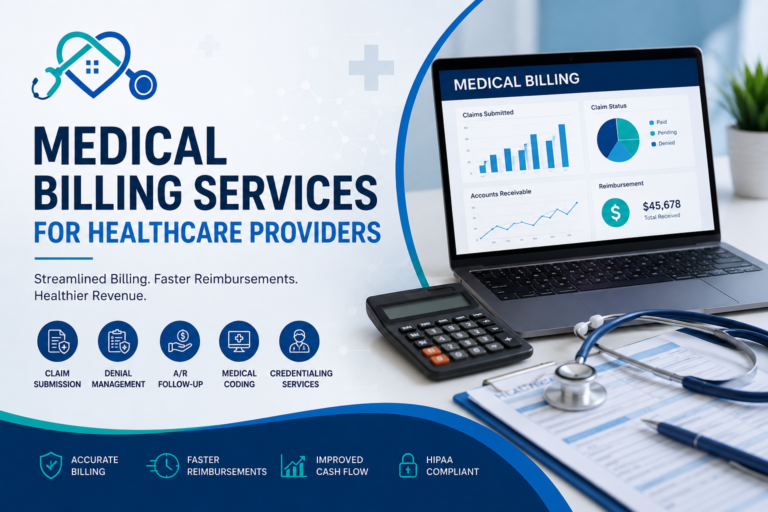
Professional billing companies can support multiple stages of the revenue cycle. Depending on the provider and specialty, services may include:
1. Patient Eligibility and Benefits Verification
Before providing certain services, it is important to understand a patient’s insurance coverage and benefits.
Eligibility and benefits verification can help identify potential coverage issues before a claim is submitted. This may reduce surprises for both the provider and the patient.
2. Medical Coding
Medical coding converts information from a patient’s medical record into standardized codes used for billing and insurance claims.
Accurate coding is essential because incorrect or incomplete codes can contribute to claim delays, denials, or payment problems.
Professional medical coding services can help practices maintain accurate coding processes while reducing the workload placed on internal staff.
3. Claims Submission
After coding and billing information has been prepared, claims must be submitted to the appropriate payer.
A structured claims submission process helps ensure that required information is included and potential errors are identified before submission.
4. Denial Management
Denied claims can significantly affect practice revenue if they are not addressed promptly.
A professional billing team can review denial reasons, identify recurring problems, correct appropriate claims, and follow up with payers.
Effective denial management is therefore an important part of maintaining a healthy revenue cycle.
5. Accounts Receivable Management
Accounts receivable represents money that is still owed to the healthcare practice.
Billing specialists can monitor outstanding balances, follow up on unpaid claims, and identify aging accounts that may require additional attention.
6. Insurance Credentialing
Providers also need to be properly credentialed with insurance networks.
Insurance credentialing services can help healthcare professionals manage the administrative requirements involved in joining and maintaining participation with insurance networks.
How Can Outsourcing Medical Billing Help a Practice?
Managing billing internally can require trained employees, software, ongoing education, quality control, and significant administrative time.
Outsourcing can provide access to a specialized billing team without requiring a practice to manage every part of the billing operation internally.
Reduced Administrative Work
Healthcare staff can spend less time on claims and billing-related tasks and more time supporting patients and daily practice operations.
Specialized Billing Knowledge
Medical billing requirements can change based on payer policies, specialties, coding requirements, and other factors. A specialized billing team can focus specifically on these processes.
Better Revenue Cycle Visibility
Professional billing services can provide practices with information about claims, payments, denials, and outstanding balances, helping providers understand where revenue cycle problems may exist.
Improved Denial Follow-Up
Unresolved denials can become difficult to collect over time. Consistent follow-up can help practices address issues before they become older accounts receivable.
Medical Billing for Different Healthcare Specialties
Billing requirements can vary considerably between healthcare specialties.
A behavioral health provider, physical therapist, chiropractor, mental health professional, or medical clinic may have different documentation, coding, authorization, and payer requirements.
For this reason, healthcare practices should consider whether a billing company understands their specific specialty.
Specialized billing support may include areas such as:
- Mental health billing
- Behavioral health billing
- Chiropractic billing
- Physical therapy billing
- Telehealth billing
- Family practice billing
- Specialty medical billing
Choosing a company with experience in the provider’s specialty can make the billing process more efficient and easier to manage.
The Role of Technology in Medical Billing
Modern medical billing often relies on technology to organize claims, patient information, payment data, and revenue cycle processes.
Technology can help billing teams:
- Track claim status
- Organize billing information
- Identify outstanding accounts
- Monitor denials
- Improve communication
- Generate revenue cycle reports
However, technology alone is not enough. A strong billing process also requires knowledgeable people who can review information, identify problems, communicate with payers, and take appropriate action.
How to Choose the Right Medical Billing Company
Not every billing company will be the right fit for every healthcare practice.
Before selecting a billing partner, providers should consider:
Experience
Look for experience with your healthcare specialty and payer environment.
Services
Determine whether the company provides the complete services you need, from billing and coding to denial management and credentialing.
Communication
A reliable billing partner should provide clear communication and make it easy for the practice to understand billing performance.
Transparency
Ask how billing performance is reported and which key metrics will be tracked.
Security and Compliance
Medical billing involves sensitive patient and healthcare information. Practices should evaluate a billing provider’s approach to privacy, security, and regulatory compliance.
What Is Revenue Cycle Management?
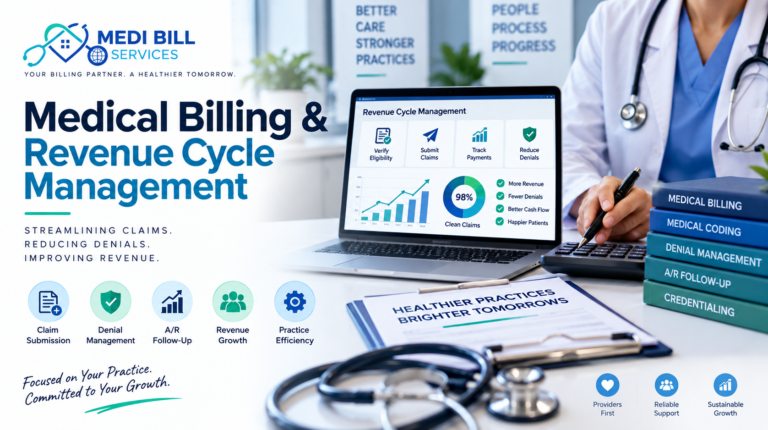
Revenue Cycle Management, commonly called RCM, refers to the financial process that begins when a patient schedules or receives care and continues through claim submission, payment, and account resolution.
Medical billing is one part of the larger revenue cycle.
A comprehensive RCM process may involve:
- Patient registration
- Insurance verification
- Authorization
- Documentation
- Medical coding
- Claim submission
- Payment posting
- Denial management
- Patient billing
- Accounts receivable follow-up
Managing these steps effectively can help healthcare organizations create a more organized and efficient financial workflow.
Final Thoughts
Medical billing plays an important role in the financial health of a healthcare practice. Errors, unpaid claims, denied claims, and inefficient administrative processes can all contribute to revenue problems.
Professional medical billing and revenue cycle management services can help providers manage these responsibilities more efficiently while allowing their teams to focus on delivering quality patient care.
The best approach is to choose a billing partner that understands your specialty, provides transparent communication, uses appropriate technology, and offers the services your practice actually needs.
If your practice is looking for professional support with medical billing, coding, credentialing, claims, or revenue cycle management, exploring the services available from MediBill Services can be a useful next step.
Frequently Asked Questions
1. What are medical billing services?
Medical billing services help healthcare providers manage the administrative and financial processes involved in submitting claims, tracking payments, handling denials, and managing outstanding accounts.
2. Why should a healthcare practice outsource medical billing?
Outsourcing can reduce administrative workload and give a practice access to professionals who specialize in billing, coding, claims, denial management, and revenue cycle processes.
3. What is the difference between medical billing and medical coding?
Medical coding involves translating clinical documentation into standardized codes. Medical billing uses that information to prepare and submit claims, track payments, and manage the financial side of healthcare services.
4. Can medical billing companies handle denied claims?
Yes. Many professional billing companies offer denial management, including reviewing denial reasons, correcting appropriate claims, resubmitting claims, and following up with payers.
5. What is revenue cycle management in healthcare?
Revenue Cycle Management is the complete financial process surrounding healthcare services, from patient registration and insurance verification through claim submission, payment, denial management, and accounts receivable follow-up.
6. Do small medical practices need professional billing services?
Small practices can also benefit from professional billing support, particularly when they have limited administrative staff or do not have an in-house team dedicated to billing and coding.
7. Does medical billing vary by specialty?
Yes. Different specialties may have different coding, documentation, authorization, and payer requirements. Choosing a billing provider with relevant specialty experience can therefore be beneficial.
8. What should I look for in a medical billing company?
Consider the provider’s specialty experience, range of services, communication process, reporting, technology, security practices, and overall approach to revenue cycle management.
9. How can denial management affect practice revenue?
Unresolved claim denials can delay payments and increase outstanding accounts receivable. Consistent denial review and follow-up can help practices address billing problems more efficiently.
10. Can a medical billing company help with insurance credentialing?
Many medical billing companies also provide credentialing services. Credentialing support can help providers manage the administrative process associated with insurance network participation.
11. Is telehealth billing different from regular medical billing?
Telehealth services can have specific billing, documentation, coding, and payer requirements. Practices should work with billing professionals who understand the requirements applicable to their telehealth services.
12. How do I know whether my practice needs outsourced medical billing?
If your staff spends significant time dealing with claims, denials, unpaid accounts, coding, or insurance-related administrative work, outsourcing may be worth considering. A practice can evaluate its current billing performance and administrative costs before making a decision.