Medical Billing Errors: Common Causes and How to Avoid Them
Medical billing plays an essential role in helping healthcare providers receive accurate and timely reimbursement for the services they deliver. However, even small mistakes in patient information, insurance details, coding or claim submission can lead to rejected claims, payment delays and additional administrative work.
For medical practices, hospitals and independent healthcare providers, understanding common medical billing errors is an important step towards improving financial performance and maintaining an efficient revenue cycle.
In this guide, we explore the most common medical billing mistakes, explain why they happen and share practical ways healthcare providers can reduce errors and improve their billing processes.
What Are Medical Billing Errors?
Medical billing errors occur when information submitted on a healthcare claim is incorrect, incomplete, inconsistent or does not meet the payer’s requirements.
These mistakes can happen at different stages of the billing process, from patient registration and insurance verification to medical coding, claim submission and payment posting.
Depending on the issue, a claim may be rejected before processing, denied after review, delayed for additional information or paid incorrectly.
Not every rejected or denied claim results from a billing mistake. Payer policies, coverage limitations, authorisation requirements and other circumstances can also affect claim outcomes.
7 Common Medical Billing Errors
1. Incorrect Patient Information
Incorrect patient names, dates of birth, insurance identification numbers or demographic details can prevent a claim from matching the payer’s records.
Even minor discrepancies may cause processing problems.
How to avoid it:
- Verify patient information during registration.
- Confirm insurance details before appointments or procedures.
- Update records whenever a patient’s information changes.
- Use consistent data-entry procedures across the practice.
Accurate patient registration creates a stronger foundation for the entire billing process.
2. Incomplete Insurance Verification
Insurance coverage and benefits can vary by patient, service and plan. When eligibility is not checked properly, a provider may submit a claim for a service that requires additional authorisation or is not covered under the patient’s plan.
How to avoid it:
- Verify eligibility before providing scheduled services where appropriate.
- Review relevant coverage limitations and patient responsibilities.
- Check whether prior authorisation or a referral is required.
- Document verification results according to office procedures.
Insurance verification helps practices identify potential payment issues before claims are submitted.
3. Medical Coding Errors
Medical codes communicate diagnoses, procedures and services to payers. Incorrect, incomplete or insufficiently supported codes can result in claim denials, requests for clarification or inaccurate reimbursement.
Coding errors may occur when the wrong code is selected, required details are omitted or the code does not match the clinical documentation.
How to avoid it:
- Ensure codes are supported by the medical record.
- Follow applicable coding guidelines and payer requirements.
- Keep coding staff updated on relevant changes.
- Review unusual or complex cases when additional expertise is needed.
Accurate medical coding supports clear documentation and helps claims reflect the services actually provided.
4. Missing or Incorrect Claim Information
A claim may be returned or denied when required fields are missing or information is inconsistent.
Examples include incomplete provider details, missing authorisation information, incorrect service dates or absent supporting documentation.
How to avoid it:
- Use a standard claim review checklist.
- Check mandatory fields before submission.
- Confirm provider and payer details.
- Use appropriate claim-scrubbing tools where available.
A consistent pre-submission review can help identify avoidable errors before a claim reaches the payer.
5. Duplicate Claim Submissions
Duplicate claims may occur when staff resubmit a claim without checking its current status or when separate systems submit the same service more than once.
Duplicate submissions can create extra administrative work and may result in denials.
How to avoid it:
- Track claims through a central billing workflow.
- Check the original submission status before resubmitting.
- Record claim reference numbers and submission dates.
- Establish clear procedures for handling corrected claims.
A reliable tracking system helps billing teams understand which claims need action and which are already being processed.
6. Missed Filing Deadlines
Insurance payers often have deadlines for submitting claims. When a claim is submitted after the applicable deadline, payment may be denied unless an exception or appeal is available under the payer’s rules.
How to avoid it:
- Maintain a schedule of payer-specific filing deadlines.
- Monitor outstanding claims regularly.
- Prioritise claims approaching their deadlines.
- Investigate workflow delays promptly.
Timely submission reduces the risk of preventable filing-related denials.
7. Poor Denial Follow-Up
Identifying a denial is only the first step. If the reason is not investigated and addressed, the practice may lose reimbursement opportunities or repeat the same mistake on future claims.
How to avoid it:
- Record denial reasons accurately.
- Separate correctable errors from coverage or policy issues.
- Assign follow-up responsibilities to appropriate team members.
- Submit corrected claims or appeals within applicable deadlines.
- Review recurring denial patterns to identify process improvements.
A structured denial management process helps practices respond consistently and learn from repeated problems.
How Medical Billing Errors Affect Healthcare Providers
Billing errors can affect more than an individual claim. When problems occur frequently, they may disrupt the financial and administrative operations of a healthcare practice.
Delayed Payments
Incorrect or incomplete claims may require corrections, additional documentation or resubmission. These steps can increase the time between providing a service and receiving payment.
Increased Administrative Costs
Staff may need to spend additional time investigating errors, contacting payers, correcting records and following up on outstanding claims.
Higher Claim Denial Rates
Repeated mistakes can contribute to avoidable denials and reduce the proportion of claims processed successfully on the first submission.
Uncertain Cash Flow
When payments are delayed or denied, it can become more difficult for a practice to forecast revenue and manage operating expenses.
Compliance and Documentation Risks
Inaccurate billing or coding may create compliance concerns, particularly when submitted claims do not accurately reflect the documentation or services provided.
Healthcare providers should maintain appropriate documentation, follow applicable rules and investigate potential compliance issues promptly.
Best Practices for Reducing Medical Billing Errors
Preventing every error may not be realistic, but a structured billing process can reduce common mistakes.
Establish Standard Procedures
Create clear procedures for patient registration, insurance verification, coding, claim submission, payment posting and denial follow-up.
Staff should understand their responsibilities and know how to escalate unusual cases.
Invest in Staff Training
Billing and coding requirements can change. Regular training helps staff understand relevant payer policies, coding guidance and internal procedures.
Use Billing Software Carefully
Practice management and billing systems can support eligibility checks, claim tracking, error alerts and reporting. However, software should be configured correctly and supported by appropriate human review.
Review Claims Before Submission
A pre-submission review can identify missing fields, inconsistent information and other common issues. Automated claim-scrubbing tools may assist with these checks.
Monitor Billing Performance
Review useful indicators such as first-pass acceptance, denial rates, days in accounts receivable and outstanding claims. These measures can help identify areas requiring attention.
Performance should be assessed using consistent definitions and relevant payer or practice data rather than assumptions.
Analyse Recurring Denials
If the same denial reason appears repeatedly, investigate the underlying process. The issue may involve registration, authorisation, coding, documentation or a misunderstanding of payer requirements.
Correcting the underlying cause can be more effective than repeatedly fixing individual claims.
How Medical Billing Services Can Help
Managing the full billing process can be challenging for busy healthcare practices. Specialist medical billing support can help organise workflows, monitor claims and provide additional administrative capacity.
Depending on the agreed service, a medical billing provider may assist with:
- Patient and insurance information checks.
- Claim preparation and submission.
- Claim status monitoring.
- Payment posting and reconciliation.
- Denial identification and follow-up.
- Billing reports and performance reviews.
Outsourcing does not remove a healthcare provider’s responsibilities for appropriate documentation, accurate clinical information or compliance. Practices should choose a provider with suitable processes, security controls and experience relevant to their needs.
At Medi Bill Services, healthcare providers can explore medical billing support designed to help organise claims processing and revenue cycle workflows.
Learn more about our medical billing and revenue cycle management services.
Medical Billing Errors vs Medical Coding Errors
Medical billing and medical coding are closely connected, but they are not the same process.
Medical coding involves translating documented diagnoses, procedures and services into appropriate codes. Medical billing uses relevant patient, insurance, coding and service information to prepare and manage claims for reimbursement.
A coding error can lead to a billing problem, but billing errors can also occur because of incorrect insurance details, missing claim fields, filing deadlines or duplicate submissions.
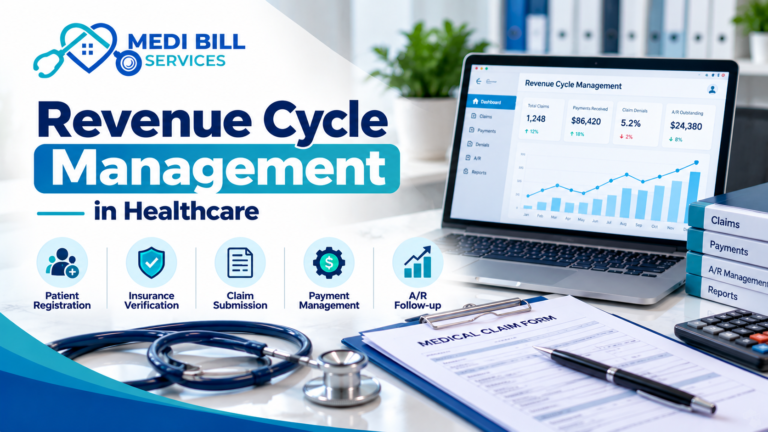
For this reason, effective revenue cycle management requires coordination between registration, clinical documentation, coding, billing and payment follow-up.
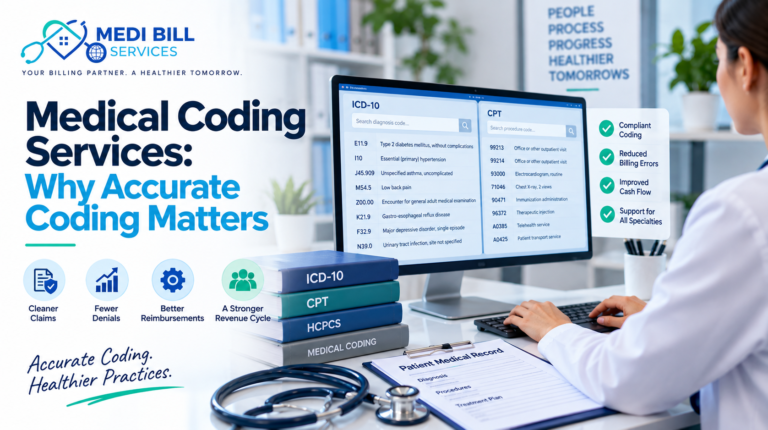
You can also read our related guide, Medical Coding Services: Why Accurate Coding Matters, to understand how accurate coding supports the claims process.
Frequently Asked Questions
1. What are the most common medical billing errors?
Common medical billing errors include incorrect patient information, incomplete insurance verification, coding inaccuracies, missing claim details, duplicate submissions, missed filing deadlines and insufficient denial follow-up.
2. What causes medical billing claim denials?
Denials can occur because of incorrect or incomplete information, coding issues, missing authorisation, coverage restrictions, filing deadlines or payer-specific requirements. Reviewing the explanation provided by the payer helps identify the appropriate next step.
3. How can healthcare providers reduce medical billing errors?
Providers can reduce errors by verifying patient and insurance details, maintaining accurate documentation, training billing staff, reviewing claims before submission and monitoring denial patterns.
4. What is the difference between a rejected claim and a denied claim?
A rejected claim is generally returned because it fails an initial submission or data requirement and has not proceeded through normal adjudication. A denied claim has typically been processed by the payer but has not been approved for payment as submitted. Exact terminology can vary by payer.
5. Can a denied medical claim be corrected?
Some denied claims can be corrected and resubmitted, while others may require an appeal or additional documentation. The appropriate response depends on the denial reason, payer rules and applicable deadlines.
6. Why is accurate medical coding important for billing?
Accurate coding helps ensure that claims reflect the documented diagnoses, procedures and services. Incorrect coding can contribute to denials, delays, inaccurate reimbursement and compliance concerns.
7. What is denial management in medical billing?
Denial management is the process of identifying denied claims, understanding the reasons, determining whether correction or appeal is appropriate and addressing recurring problems in the billing workflow.
8. How does medical billing software help prevent errors?
Billing software may identify missing information, flag certain inconsistencies, track claims and generate reports. Its effectiveness depends on correct configuration, suitable workflows and appropriate staff review.
9. Should a healthcare practice outsource medical billing?
Outsourcing may be useful when a practice needs additional billing expertise, administrative capacity or more structured claim follow-up. Practices should compare costs, service scope, security arrangements, reporting and the provider’s experience before making a decision.
10. How can Medi Bill Services help healthcare providers?
Medi Bill Services provides medical billing-related support for healthcare providers. Contact the team to discuss your practice’s requirements and confirm which billing and revenue cycle services are available.
Conclusion
Medical billing errors can create avoidable delays, additional administrative work and uncertainty for healthcare providers. By improving patient registration, verifying insurance information, maintaining accurate coding, reviewing claims and following up on denials, practices can strengthen their billing processes.
Consistent procedures, staff training and regular performance reviews can help identify recurring problems and support a more organised revenue cycle.
For practices seeking additional support, Medi Bill Services can be a starting point for discussing medical billing needs and exploring suitable services.
Visit Medi Bill Services to learn more about medical billing support.