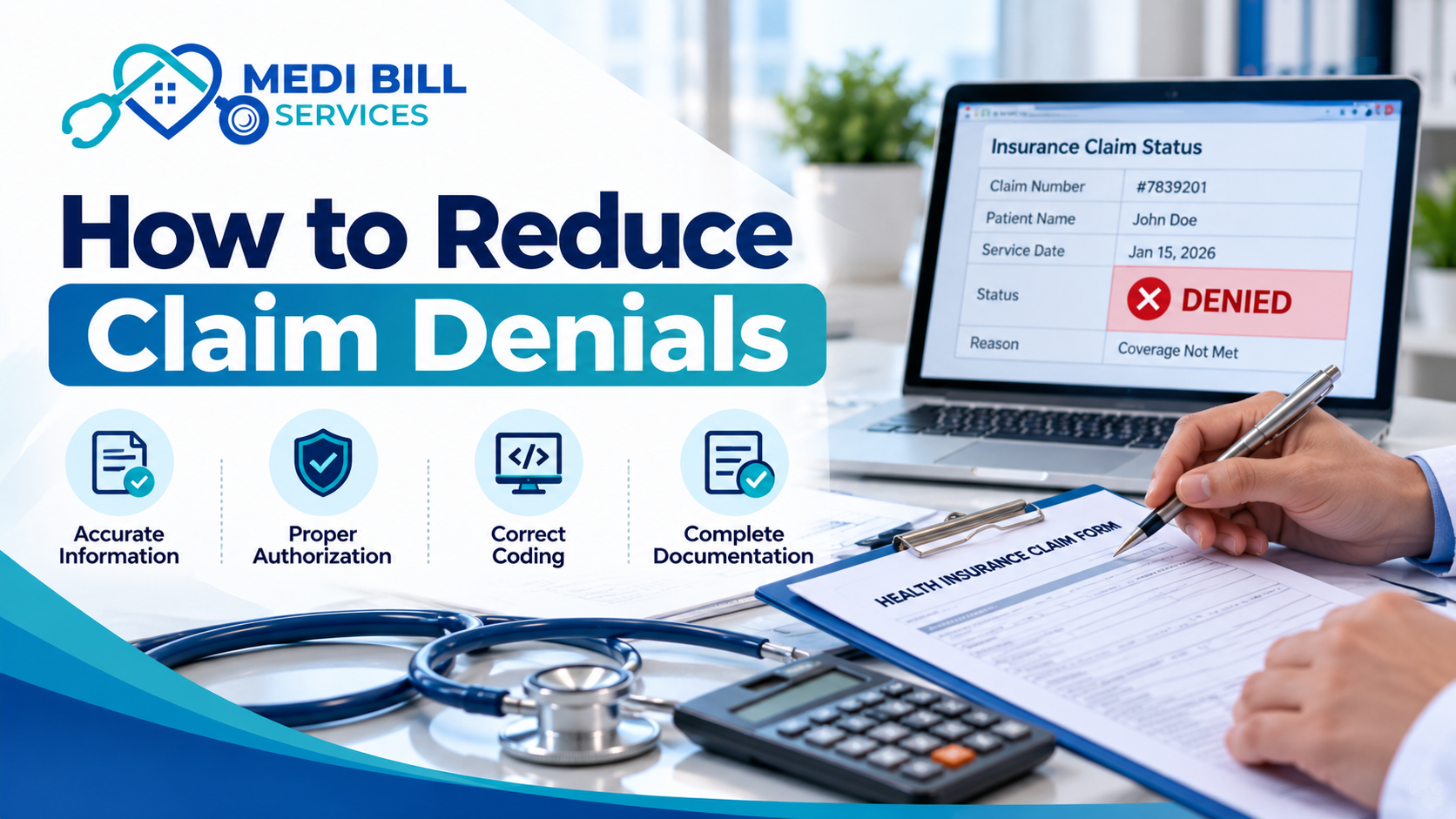
How to Reduce Claim Denials
Medical claim denials are a common challenge for healthcare providers. When an insurance company denies a claim, the practice may need to investigate the reason, correct errors, provide additional documentation, or submit an appeal. These extra steps can delay payments and increase administrative workload.
A well-organized medical billing process can help healthcare practices identify billing issues early, reduce avoidable claim denials, and manage outstanding payments more effectively.
In this guide, we will explain the common reasons for medical claim denials, practical ways to prevent them, and best practices for managing denied claims.
What Are Medical Claim Denials?
A medical claim denial occurs when an insurance payer refuses to pay all or part of a submitted healthcare claim. The reason may relate to coverage, coding, documentation, authorization, eligibility, or other payer requirements.
A denial is different from a rejected claim. A rejected claim is often returned because it contains errors or fails initial submission requirements before the payer completes its full adjudication process. A denied claim has generally been processed by the payer, which has determined that payment cannot be made as submitted.
Understanding this difference helps billing teams choose the appropriate corrective action.
Common Reasons for Medical Claim Denials
Identifying the reason behind a denial is the first step toward preventing similar issues in the future.
1. Incorrect Patient Information
Incorrect patient names, dates of birth, insurance identification numbers, or other demographic details can cause claim processing problems.
Even small data-entry errors may result in a rejected claim or a payment delay.
How to prevent it: Verify patient demographics and insurance information during registration. Review the details before submitting claims and update records when patients report changes.
2. Insurance Eligibility Problems
A patient’s insurance coverage may be inactive, may not include a particular service, or may be subject to specific limitations.
Submitting claims without checking eligibility can lead to avoidable denials.
How to prevent it: Verify eligibility and relevant benefits before appointments or procedures whenever possible. Remember that eligibility verification does not guarantee that a specific claim will be paid.
3. Medical Coding Errors
Incorrect diagnosis codes, procedure codes, modifiers, or code combinations can cause claims to be denied.
Coding must accurately reflect the services documented in the patient’s medical record and follow applicable coding guidelines.
How to prevent it: Use qualified coding professionals, review relevant coding updates, and confirm that submitted codes are supported by the clinical documentation.
4. Missing Medical Documentation
Insurance companies may require clinical notes, test results, referrals, or other supporting records to determine whether a service meets their payment requirements.
Incomplete documentation can delay claim processing or lead to denial.
How to prevent it: Maintain complete clinical records and establish a process for identifying missing documentation before claim submission.
5. Missing Prior Authorization
Some services, procedures, medications, or diagnostic tests require prior authorization from an insurance payer.
When authorization is required but not obtained, the claim may be denied according to the payer’s rules.
How to prevent it: Check authorization requirements before providing the service. Track authorization numbers, approved services, validity dates, and any applicable limitations.
6. Duplicate Claim Submissions
Submitting the same claim more than once can trigger duplicate-claim denials.
Duplicate submissions may occur when staff members are unsure whether the original claim was received or processed.
How to prevent it: Check claim status before resubmitting. Maintain a reliable record of claim submission dates, acknowledgment messages, and payer responses.
7. Timely Filing Issues
Insurance companies establish deadlines for submitting claims. Missing these deadlines can result in denials, even when the services were otherwise eligible for reimbursement.
How to prevent it: Maintain a submission schedule, monitor unresolved claims, and understand the filing deadlines that apply to each payer and contract.
8. Coordination of Benefits Problems
Patients may have more than one insurance plan. When multiple payers are involved, claims generally need to be submitted in the appropriate order according to coordination-of-benefits rules.
Incorrect payer information or submission order can delay reimbursement.
How to prevent it: Confirm primary and secondary insurance details and follow the applicable payer instructions before submitting claims.
Best Practices to Reduce Medical Claim Denials
Preventing claim denials requires a consistent process that addresses problems before, during, and after claim submission.
1. Verify Insurance Before Providing Services
Insurance verification helps identify potential coverage issues before treatment takes place.
Billing teams should confirm patient details, policy status, relevant benefits, and authorization requirements where applicable.
For recurring patients, insurance information should be reviewed regularly because coverage and policy details can change.
2. Improve Medical Documentation
Accurate documentation supports appropriate coding and helps demonstrate the services provided.
Healthcare providers should ensure that clinical records are complete, consistent, and available when needed for billing or payer review.
A clear documentation process also makes it easier to respond to requests for additional information.
3. Review Claims Before Submission
A claim review process can identify common errors before a claim reaches the payer.
Depending on the practice, pre-submission checks may include:
- Patient demographics and insurance details
- Provider identification and billing information
- Diagnosis and procedure codes
- Required modifiers
- Authorization and referral information
- Service dates and billed charges
- Supporting documentation requirements
Automated claim-scrubbing software may help flag certain problems, but complex cases can still require manual review.
4. Follow Current Coding Guidelines
Coding requirements can change, and different payers may have specific billing policies.
Practices should ensure that coding staff have access to current guidance and understand the rules relevant to their specialties.
Regular coding reviews can help identify patterns such as incorrect modifiers, unsupported codes, and inconsistent documentation.
5. Submit Claims Promptly
Submitting claims soon after services are provided helps reduce the risk of missing filing deadlines.
Practices should monitor claims that have not received an acknowledgment or appear to be stuck in the submission process.
If a claim is rejected before payer processing, the billing team should correct the identified problem and resubmit it according to the applicable requirements.
6. Track Denial Reasons
Recording denial reasons allows healthcare practices to identify recurring problems.
For example, repeated denials related to eligibility may indicate that registration procedures need improvement. Frequent authorization denials may suggest that pre-service checks require additional attention.
Reviewing these patterns helps practices focus on the issues most likely to improve billing performance.
7. Establish a Denial Management Workflow
A denial management workflow should clearly explain how denied claims are reviewed and resolved.
A structured process may include:
- Record the denial and its reason.
- Review the payer’s explanation and claim details.
- Determine whether the claim requires correction, additional documentation, or an appeal.
- Take the appropriate action within the relevant deadline.
- Track the claim until a final outcome is received.
- Record the outcome and identify any process improvements needed.
Assigning responsibilities and tracking deadlines helps prevent denied claims from being overlooked.
8. Train Billing Staff Regularly
Billing teams need to understand coding rules, payer policies, documentation standards, and claim submission procedures.
Regular training can help staff recognize common errors and respond appropriately when requirements change.
Practices can also use internal claim reviews to identify training needs and improve consistency.
9. Use Medical Billing Technology Effectively
Medical billing software can support claim tracking, eligibility checks, automated error alerts, payment posting, and reporting.
When selecting technology, consider the practice’s size, specialty, system integrations, security requirements, and reporting needs.
Software should support a clear billing process rather than replace the review and judgment required for complex claims.
10. Monitor Denial Performance
Healthcare practices should regularly review denial-related metrics to understand whether their processes are improving.
Useful measures include the denial rate, common denial reasons, time taken to resolve denials, and the value of denied claims.
Definitions should be consistent when comparing performance over time. A lower denial rate can be a useful indicator, but it should be considered alongside collection performance, claim volume, and other relevant measures.
How to Manage Denied Medical Claims
Even well-managed practices may receive denied claims. The key is to review each denial carefully and determine the correct next step.
Step 1: Review the Explanation of Benefits or Remittance Advice
Check the payer’s explanation for the denial, including applicable reason codes and any additional instructions.
The explanation can help identify whether the issue relates to coverage, coding, documentation, authorization, or another requirement.
Step 2: Check the Original Claim
Compare the submitted claim with the patient record, insurance information, and payer requirements.
Confirm whether the information was accurate and whether any required documents were missing.
Step 3: Determine the Appropriate Action
Depending on the reason, the next step may involve correcting the claim, supplying additional information, contacting the payer, or submitting an appeal.
Not every denial should be handled in the same way. Follow the payer’s instructions and applicable contractual or regulatory requirements.
Step 4: Observe the Relevant Deadlines
Corrected claims and appeals may have specific filing deadlines.
Billing teams should record these dates and prioritize cases that are approaching their deadlines.
Step 5: Track the Final Outcome
Continue monitoring the claim until the payer provides a final decision or the balance is otherwise resolved.
Record the result so that the practice can measure recovery efforts and identify opportunities to prevent similar denials.
How Outsourced Medical Billing Can Help
Managing claim denials requires time, trained staff, clear procedures, and consistent follow-up.
A medical billing company may help healthcare providers manage claim submissions, review denial reasons, track outstanding accounts receivable, and coordinate appropriate corrective actions.
The exact support available depends on the company’s services and the agreement with the practice.
Before choosing an external billing provider, healthcare practices should review its experience, reporting processes, communication standards, data security practices, and approach to denial management.
Explore Medi Bill Services to learn more about available medical billing support. You can also review the medical specialties page for information relevant to different healthcare practices.
Conclusion
Medical claim denials can delay reimbursement and create additional administrative work for healthcare providers. However, many preventable problems can be addressed through accurate patient information, insurance verification, complete documentation, appropriate coding, and timely claim submission.
Practices should also establish a clear denial management process, monitor recurring denial reasons, and train billing staff regularly.
By combining preventive checks with consistent follow-up, healthcare organizations can improve billing workflows and manage their revenue cycle more effectively.
Frequently Asked Questions
What is a medical claim denial?
A medical claim denial occurs when an insurance payer refuses to pay all or part of a healthcare claim after reviewing it. The payer usually provides a reason that helps the billing team determine the appropriate next step.
What is the difference between a rejected and a denied claim?
A rejected claim is generally returned because it fails initial submission or data requirements. A denied claim has typically been processed by the payer, which has determined that payment cannot be made as submitted.
What are the most common reasons for medical claim denials?
Common reasons include incorrect patient information, inactive or limited coverage, coding errors, missing documentation, authorization problems, duplicate submissions, and missed filing deadlines.
How can healthcare providers reduce claim denials?
Providers can verify insurance eligibility, maintain complete documentation, review claims before submission, follow coding guidelines, submit claims promptly, and analyze denial trends.
Can medical claim denials be appealed?
Some denied claims can be appealed when there are valid grounds and the payer’s appeal requirements are met. The practice should review the denial reason, gather supporting documentation, and follow the applicable appeal process and deadlines.
What is denial management in medical billing?
Denial management is the process of reviewing denied claims, identifying the reasons, correcting problems where appropriate, submitting appeals when justified, and tracking claims until resolution.