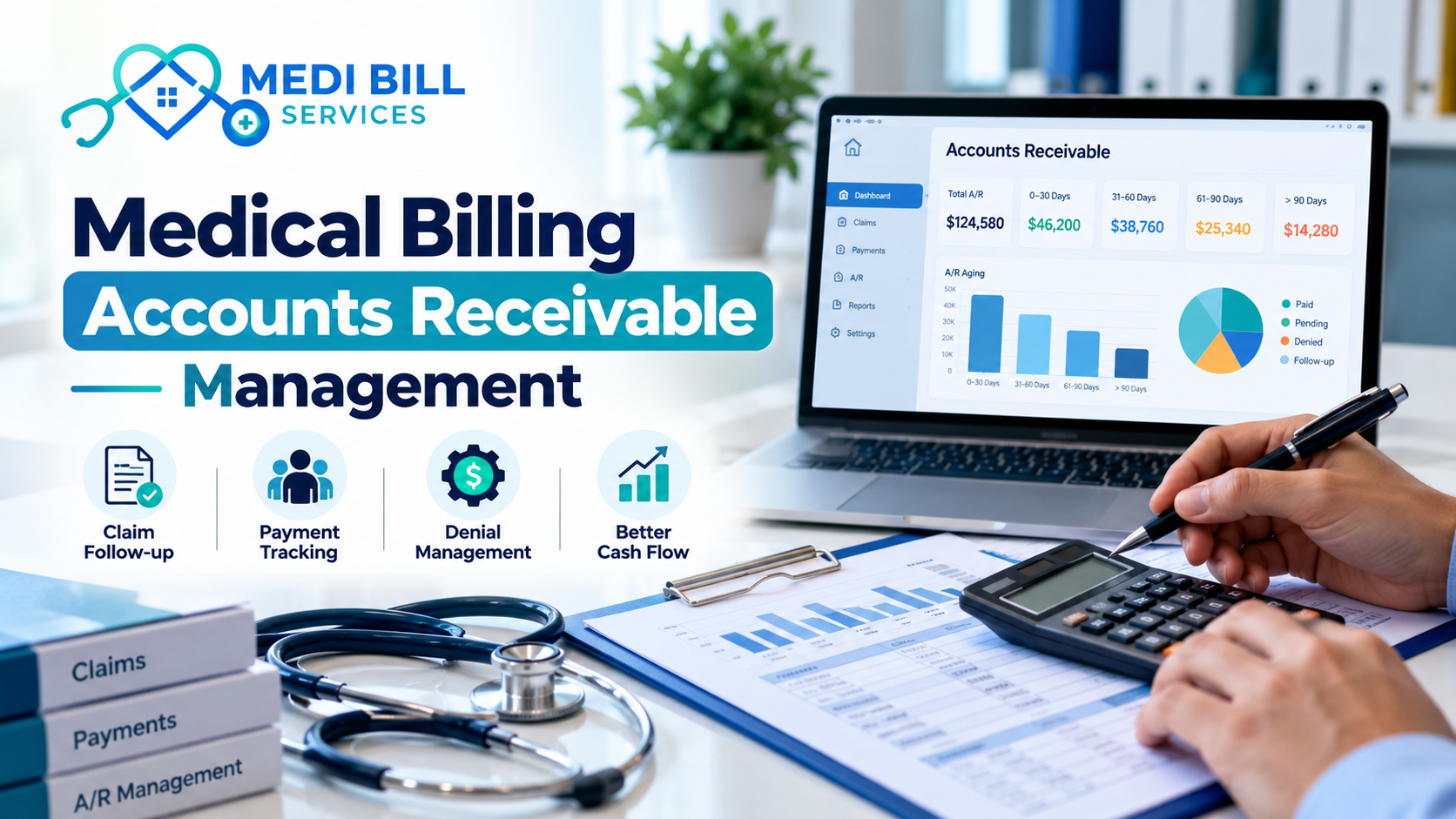
Accounts Receivable in Medical Billing
Accounts receivable management is an important part of maintaining the financial health of a healthcare practice. When doctors, clinics, and hospitals provide medical services, payments may come from insurance companies or patients after the services have been delivered. Managing these outstanding payments effectively helps healthcare providers maintain accurate financial records and monitor their revenue.
Poor accounts receivable management can lead to delayed payments, unresolved insurance claims, increasing administrative workloads, and cash flow challenges. A structured process helps healthcare practices identify outstanding balances, follow up on unpaid claims, and resolve billing issues more efficiently.
In this guide, we will explain accounts receivable management in medical billing, common challenges, practical strategies, and best practices for improving payment tracking.
What Is Accounts Receivable Management?
Accounts receivable (AR) refers to money owed to a healthcare practice by insurance companies or patients for services already provided.
Accounts receivable management is the process of tracking these outstanding balances, monitoring payment status, investigating delays, and taking appropriate steps to collect the money owed.
In medical billing, AR management may include reviewing unpaid insurance claims, contacting payers, correcting claim errors, submitting appeals when appropriate, and following up on patient balances.
An organized AR process helps healthcare providers understand how much money remains outstanding and which accounts require immediate attention.
Why Is Accounts Receivable Management Important?
Effective accounts receivable management helps healthcare practices maintain better control over their billing operations.
Improved Cash Flow Visibility
Healthcare practices have ongoing expenses such as employee salaries, rent, medical equipment, and supplies. Understanding outstanding payments helps practice managers estimate incoming revenue and plan expenses more effectively.
Although AR management cannot guarantee faster payer payments, consistent follow-up can help identify and address avoidable delays.
Reduced Outstanding Balances
When unpaid claims are not monitored regularly, they can remain unresolved for extended periods.
A structured follow-up process helps billing teams identify overdue accounts, investigate the reasons for nonpayment, and take appropriate corrective action.
Better Denial Management
Some outstanding claims remain unpaid because they have been denied or rejected.
Reviewing denial reasons and addressing problems promptly helps practices determine whether claims need correction, additional documentation, or an appeal.
More Accurate Financial Reporting
Accurate AR records help healthcare providers understand their outstanding balances and payment activity.
These records also support financial reporting, reconciliation, and operational decision-making.
Reduced Administrative Work
Clear procedures for tracking and following up on outstanding claims can help billing teams avoid duplicated efforts and missed follow-ups.
When responsibilities are defined, staff can focus on accounts that need attention instead of repeatedly reviewing the same information without a clear action plan.
Common Accounts Receivable Challenges in Medical Billing
Healthcare practices may face several issues that prevent outstanding payments from being resolved efficiently.
Unpaid Insurance Claims
Insurance claims may remain unpaid because they are still being processed, require additional information, or have encountered a billing issue.
How to address it: Review claim status regularly, identify the reason for the delay, and follow the payer’s instructions for resolving the issue.
Claim Denials and Rejections
Incorrect patient information, coding errors, missing documentation, and authorization problems can result in rejected or denied claims.
How to address it: Record the reason for each issue, correct errors where appropriate, and submit corrected claims or appeals according to payer requirements and applicable deadlines.
Incomplete Documentation
Payers may request additional clinical records or other supporting information before making a payment decision.
How to address it: Maintain organized documentation and establish a process for responding to payer requests promptly.
Delayed Claim Follow-Up
When billing staff do not follow up consistently, outstanding claims may remain unresolved longer than necessary.
How to address it: Assign responsibility for follow-up, establish a regular review schedule, and document every action taken.
Patient Outstanding Balances
Patients may have remaining balances after insurance processing, depending on their coverage and applicable agreements.
How to address it: Provide clear billing statements, maintain accurate account records, and offer appropriate communication about payment responsibilities and available payment options.
Limited Visibility Into AR Performance
Without accurate reports, practice managers may struggle to identify which claims are overdue or which payers are associated with recurring delays.
How to address it: Use billing reports and accounts receivable aging summaries to identify patterns and prioritize follow-up activities.
What Is an Accounts Receivable Aging Report?
An accounts receivable aging report organizes outstanding balances according to how long they have remained unpaid.
Healthcare practices commonly group balances into time ranges such as:
- 0–30 days
- 31–60 days
- 61–90 days
- More than 90 days
The exact categories may vary by billing system and practice policy.
An aging report helps billing teams identify older balances that may require additional attention. However, an older claim is not necessarily a lost payment. Its status, payer requirements, filing deadlines, and reason for nonpayment should be reviewed before deciding what action to take.
For example, a claim awaiting payer review may require a status inquiry, while a denied claim may need correction or an appeal.
Regularly reviewing aging reports gives healthcare providers a clearer picture of their outstanding accounts.
Best Practices for Effective Accounts Receivable Management
A consistent AR management process helps healthcare practices organize follow-up and identify billing problems.
1. Submit Accurate Claims on Time
Accurate and timely claim submission is an important starting point for effective AR management.
Before submission, review patient details, insurance information, coding, charges, authorization requirements, and supporting documentation.
Submitting complete claims within applicable payer deadlines can help reduce avoidable processing problems.
2. Monitor Claim Status Regularly
Track submitted claims to determine whether they have been received, processed, paid, rejected, or denied.
Claims without a clear status should be investigated according to the payer’s procedures.
Maintaining a reliable tracking system helps prevent unresolved claims from being overlooked.
3. Prioritize Accounts Based on Risk
Not every outstanding balance requires the same action.
Consider claim age, balance amount, denial reason, payer response, and filing or appeal deadlines when deciding which accounts to review first.
Claims approaching important deadlines may require urgent attention, while other balances may need routine monitoring.
4. Address Denials Promptly
Review denial explanations and determine the appropriate next step.
Depending on the circumstances, this may involve correcting the claim, providing missing documentation, contacting the payer, or submitting an appeal.
Track the claim until the issue is resolved and record the outcome for future reporting.
5. Improve Insurance Verification
Insurance verification before services are provided can help identify coverage issues and applicable authorization requirements.
Confirming relevant information early may reduce certain preventable billing problems, although eligibility verification does not guarantee reimbursement.
6. Maintain Clear Follow-Up Records
Document claim status, payer conversations, reference numbers, required actions, and follow-up dates.
Clear records help staff understand what has already been done and what needs to happen next.
They also make it easier to review unresolved accounts when responsibilities change between team members.
7. Review Patient Balances Carefully
After insurance processing, confirm that patient balances are calculated and recorded accurately.
Statements should explain the balance clearly and reflect applicable insurance adjustments and payment records.
Consistent communication can help reduce confusion and support more organized patient billing.
8. Use Medical Billing Technology
Medical billing and practice management software can help track claims, record payments, generate aging reports, and organize follow-up tasks.
When selecting software, consider reporting capabilities, workflow integration, access controls, data security, and ease of use.
Technology can support AR management, but it should be combined with clear procedures and appropriate staff oversight.
9. Review AR Reports Regularly
Regular reviews help practices identify older balances, repeated denials, payment delays, and other patterns.
Compare reports over time using consistent definitions so that changes in performance can be understood accurately.
Use the findings to improve billing workflows and prioritize resources.
10. Train Billing Staff
Billing staff should understand claim tracking, denial follow-up, payer communication, payment posting, and applicable filing deadlines.
Regular training helps employees follow consistent procedures and respond appropriately when billing requirements change.
Important Accounts Receivable Metrics to Track
Monitoring key performance indicators can help healthcare practices evaluate their AR management process.
Days in Accounts Receivable
This metric estimates how long it takes a practice to collect outstanding payments. The calculation method and interpretation can vary according to the practice’s reporting approach.
AR Aging Distribution
This shows how outstanding balances are distributed across different age categories. A growing proportion of older AR may indicate a need to investigate unresolved claims or collection delays.
Denial Rate
The denial rate measures the proportion of claims denied during a defined period. Consistent calculation methods are important when comparing performance over time.
Collection Rate
Collection-related metrics help practices evaluate how effectively expected or collectible payments are being received. The exact formula should be clearly defined before results are compared.
Outstanding AR Value
This represents the total amount of money still owed to the practice. Reviewing the amount alongside claim age and payer status helps identify where follow-up may be needed.
These metrics should be evaluated together. No single measure provides a complete picture of a practice’s financial performance.
In-House vs. Outsourced Accounts Receivable Management
Healthcare providers can manage accounts receivable internally or work with an external medical billing company.
In-House AR Management
An internal billing team manages outstanding claims, payer communication, payment posting, and follow-up.
This approach can provide direct oversight and close coordination with the practice. However, it requires suitable staffing, training, technology, and consistent procedures.
Outsourced AR Management
An external billing company may help manage unpaid claims, denial follow-up, payment tracking, and AR reporting under an agreed service arrangement.
Outsourcing may provide access to specialized billing support, but practices should review service scope, pricing, communication, data security, and reporting quality before choosing a provider.
The best option depends on the practice’s size, claim volume, specialty, available resources, and operational needs.
How Medi Bill Services Can Help
Medi Bill Services supports healthcare providers seeking assistance with medical billing and revenue cycle activities.
Depending on the services selected, practices may seek support with claim processing, denial follow-up, payment tracking, and accounts receivable workflows.
Before choosing a billing solution, healthcare providers should identify their main challenges and confirm which services are available for their specific requirements.
Explore the medical billing services page to learn more about available support. You can also visit the medical specialties page for information relevant to different healthcare practices.
Conclusion
Accounts receivable management is an essential part of healthcare financial operations. By tracking unpaid claims, reviewing aging reports, addressing denials, and maintaining consistent follow-up, healthcare practices can improve visibility into their outstanding balances.
Accurate claim submission, organized records, suitable billing technology, and regular performance reviews all contribute to an effective AR process.
Whether a practice manages accounts receivable internally or works with an external billing provider, a structured approach can help identify unresolved issues and support better revenue cycle management.
Frequently Asked Questions
What is accounts receivable management in medical billing?
Accounts receivable management is the process of tracking outstanding payments, reviewing unpaid claims, investigating delays, and following up with insurance companies or patients to resolve balances owed to a healthcare practice.
Why is accounts receivable management important for healthcare providers?
It helps providers monitor outstanding payments, identify delayed claims, manage denials, maintain accurate financial records, and understand their revenue cycle performance.
What is an AR aging report?
An AR aging report organizes unpaid balances according to how long they have remained outstanding. It helps billing teams identify older accounts and determine which claims may require follow-up.
How can healthcare practices reduce outstanding accounts receivable?
Practices can submit accurate claims promptly, monitor claim status, address denials, maintain clear follow-up records, review aging reports, and communicate clearly about patient balances.
Can outsourcing improve accounts receivable management?
Outsourcing may provide additional billing expertise and structured follow-up support. Results depend on the provider’s capabilities, agreed services, communication, and the healthcare practice’s existing workflows.