
Medical Billing Outsourcing
Medical billing outsourcing is an option for healthcare providers who want support managing insurance claims, payment posting, denial follow-up, and other billing responsibilities. Instead of handling every billing task internally, a medical practice can work with an external billing company to manage agreed parts of its revenue cycle.
For doctors, clinics, and healthcare organizations, billing can involve complex coding requirements, insurance policies, claim submission deadlines, and outstanding payments. An organized outsourcing arrangement may help reduce administrative pressure and create more consistent billing workflows.
In this guide, we will explain how medical billing outsourcing works, its main benefits, potential challenges, and how to choose the right billing partner.
What Is Medical Billing Outsourcing?
Medical billing outsourcing is the process of hiring an external company to manage some or all of a healthcare practice’s billing activities.
Depending on the agreement, an outsourced billing company may help with:
- Insurance eligibility and claim preparation
- Medical billing and claim submission
- Payment posting and reconciliation
- Denial management and claim follow-up
- Accounts receivable monitoring
- Patient billing support
- Billing reports and performance tracking
The exact services depend on the provider and the practice’s requirements. Some practices outsource their entire billing process, while others delegate only specific tasks.
Outsourcing does not eliminate the need for practice oversight. Healthcare providers should continue reviewing billing performance, maintaining accurate clinical records, and ensuring that their billing arrangements meet applicable requirements.
Why Do Healthcare Providers Outsource Medical Billing?
Healthcare practices may choose outsourcing for several operational reasons.
Reduced Administrative Workload
Medical billing involves many recurring tasks, from preparing claims to investigating unpaid balances.
Managing these responsibilities internally can take time away from other administrative activities. An external billing team may help handle agreed tasks so that practice staff can focus on patient services and day-to-day operations.
Access to Billing Expertise
Medical billing requires familiarity with coding guidance, payer requirements, claim submission procedures, and reimbursement workflows.
A specialized billing company may offer experience with these processes. Practices should confirm that the provider understands their medical specialty and the requirements relevant to their services.
Consistent Claim Follow-Up
Unpaid claims can remain unresolved when follow-up is inconsistent or responsibilities are unclear.
An outsourced billing arrangement may establish defined procedures for checking claim status, reviewing denials, and following up on outstanding payments.
Better Visibility Into Billing Performance
Billing reports can help healthcare providers understand submitted claims, outstanding balances, payment activity, and denial patterns.
A suitable outsourcing partner should explain what reports are available and how often the practice will receive them.
Flexible Support
The billing needs of a small clinic may differ from those of a larger healthcare organization.
Some billing companies offer different service arrangements, allowing practices to select support based on their workflows, claim volume, and available internal resources.
How Does Medical Billing Outsourcing Work?
The outsourcing process usually begins with an assessment of the practice’s current billing operations.
Step 1: Review Existing Billing Processes
The practice and billing provider identify current challenges, such as delayed claims, recurring denials, incomplete records, or inconsistent accounts receivable follow-up.
This review helps establish which tasks should be outsourced and which responsibilities will remain with the practice.
Step 2: Define the Scope of Services
Both parties should agree on the specific services included in the arrangement.
These may include claim submission, payment posting, denial management, patient billing, or reporting. The agreement should also identify which tasks require practice approval or additional documentation.
Step 3: Arrange Secure Information Access
The billing company may need access to relevant billing systems and patient information to perform its assigned duties.
Access should be limited to authorized personnel, with appropriate security safeguards and contractual arrangements in place.
Healthcare providers should assess their applicable privacy and data protection obligations before sharing information.
Step 4: Process and Submit Claims
The billing team uses the information supplied by the practice to prepare and submit claims according to applicable coding guidance and payer requirements.
The practice remains responsible for ensuring that clinical documentation accurately reflects the services provided.
Step 5: Monitor Payments and Denials
After submission, the billing team tracks claim status, records payments, and identifies claims that require additional attention.
Depending on the service agreement, the team may also correct eligible errors, provide requested documentation, or prepare appeals when appropriate.
Step 6: Review Reports and Performance
The practice receives agreed reports about billing activity and outstanding issues.
Regular meetings or reviews help both parties evaluate the workflow, discuss unresolved claims, and identify areas that may need improvement.
Key Benefits of Medical Billing Outsourcing
Outsourcing may offer several advantages, but the results depend on the provider’s capabilities, the service agreement, and the practice’s existing processes.
Improved Workflow Organization
A structured billing process helps assign responsibilities, track claims, and document follow-up actions.
Clear workflows can reduce confusion about which claims need attention and what action should happen next.
Support With Denial Management
Denied claims often require investigation, documentation review, corrections, or appeals.
An experienced billing team may help organize these activities and track unresolved claims within applicable deadlines.
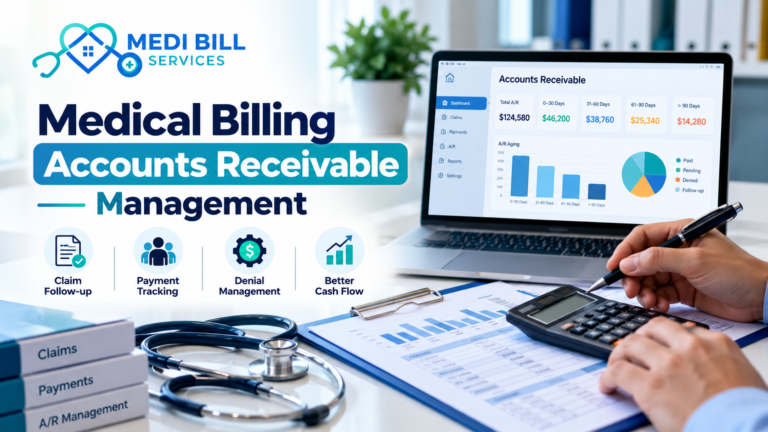
More Consistent Accounts Receivable Follow-Up
Accounts receivable represents money owed to a healthcare practice by insurers or patients.
Outsourced billing support may help practices review aging reports, prioritize outstanding balances, and monitor follow-up activity.
Reduced Need to Manage Every Billing Task Internally
When a practice delegates specific billing activities, its internal team may have fewer routine billing responsibilities to manage.
However, outsourcing still requires communication, performance monitoring, and coordination with the billing company.
Access to Billing Reports
Useful reporting can help practice managers understand claim activity, denial trends, payment posting, and outstanding balances.
Before selecting a provider, confirm which reports are included and whether they can support the practice’s operational decisions.
Potential Challenges of Medical Billing Outsourcing
Outsourcing is not automatically the best solution for every healthcare practice. Providers should consider possible challenges before entering into an agreement.
Communication Problems
If responsibilities and communication procedures are unclear, questions about claims may take longer to resolve.
How to address it: Establish clear contacts, response expectations, reporting schedules, and procedures for escalating urgent issues.
Data Security Concerns
Billing companies may handle sensitive patient and financial information.
How to address it: Evaluate security controls, access permissions, secure information transfers, staff training, and relevant contractual safeguards before sharing data.
Less Direct Day-to-Day Control
When an external team manages billing tasks, practice staff may have less direct involvement in routine processing.
How to address it: Agree on performance reports, access to claim records, review procedures, and responsibilities for resolving problems.
Unexpected Costs
Some agreements may include additional fees for services outside the standard package.
How to address it: Request a detailed pricing breakdown and clarify which tasks, reports, and follow-up activities are included.
Transition and Integration Difficulties
Moving billing tasks to an external provider may require staff coordination, system access, record transfer, and workflow changes.
How to address it: Create a transition plan that defines responsibilities, timelines, system requirements, and procedures for handling existing unpaid claims.
In-House vs. Outsourced Medical Billing
Healthcare providers generally choose between managing billing internally and delegating some or all of it to an external company.
In-House Medical Billing
With in-house billing, the practice’s employees manage claims, payment posting, and follow-up.
Potential advantages include direct supervision, immediate communication with clinical staff, and close familiarity with the practice’s operations.
However, the practice must also manage staffing, training, billing software, quality checks, and changing payer requirements.
Outsourced Medical Billing
With outsourced billing, an external company handles the tasks defined in the service agreement.
Potential advantages include access to specialized support and a structured process for claim management. The practice must still oversee performance, protect patient information, and coordinate clinical documentation.
Which Option Is Right for Your Practice?
The decision depends on several factors:
- Practice size and claim volume
- Complexity of billing requirements
- Available internal staff
- Current administrative workload
- Budget and total service costs
- Reporting and communication needs
- Security and compliance requirements
A practice with an effective internal team may prefer to retain billing in-house. A practice struggling with workload or claim follow-up may consider outsourcing selected responsibilities.
How to Choose the Right Medical Billing Company
Selecting an outsourcing partner requires careful evaluation.
Relevant Medical Billing Experience
Ask whether the company has experience with your specialty, payer mix, and common billing requirements.
A provider should be able to explain how it handles claims and billing issues relevant to your practice.
Clear Service Agreement
Confirm exactly which activities are included, which remain your responsibility, and how additional tasks are charged.
The agreement should explain service expectations, communication, reporting, and termination arrangements.
Transparent Pricing
Medical billing companies may charge a percentage of collections, a per-claim fee, a fixed fee, or another agreed structure.
Compare the total expected cost rather than focusing only on the advertised rate. Ask about setup fees, additional services, and other possible charges.
Reporting and Performance Monitoring
Ask which metrics the provider tracks and how frequently reports are delivered.
Useful measures may include claim submission status, denial trends, days in accounts receivable, and outstanding claim values.
Agree on how performance will be reviewed and how problems will be addressed.
Data Security and Privacy
Review how the company protects patient information, manages system access, trains employees, and responds to security incidents.
For US healthcare practices, assess applicable HIPAA requirements and any relevant business associate agreement obligations. Other jurisdictions may have different or additional rules.
Communication and Support
Determine how the practice can contact the billing team, report problems, and receive updates about unresolved claims.
Clear communication is essential when clinical documentation or practice decisions are needed to resolve billing issues.
How Medi Bill Services Can Support Healthcare Providers
Medi Bill Services offers medical billing-related support for healthcare providers seeking help with billing workflows and revenue cycle activities.
Depending on the services selected, practices may seek support with claim processing, denial follow-up, payment tracking, and accounts receivable management.
Before selecting an outsourcing arrangement, healthcare providers should identify their current challenges and confirm which services are available for their specialty and requirements.
Explore the medical billing services page to learn more about available support. You can also visit the medical specialties page for information relevant to different healthcare practices.
Conclusion
Medical billing outsourcing can help healthcare providers delegate selected billing responsibilities, organize claim follow-up, and manage administrative workloads.
However, successful outsourcing depends on choosing a suitable provider, defining responsibilities clearly, maintaining secure information handling, and reviewing performance regularly.
Before making a decision, compare outsourcing costs with internal resources and identify the billing activities that need the most support.
A well-planned arrangement can help a healthcare practice maintain organized billing workflows while keeping appropriate oversight of its financial operations.
Frequently Asked Questions
What is medical billing outsourcing?
Medical billing outsourcing is when a healthcare practice hires an external company to manage selected billing activities, such as claim submission, payment posting, denial follow-up, and accounts receivable monitoring.
What are the benefits of outsourcing medical billing?
Potential benefits include access to specialized billing support, organized claim follow-up, reduced internal workload, and clearer billing reports. Results depend on the provider and the services included in the agreement.
How much does medical billing outsourcing cost?
Costs vary according to claim volume, specialty, service scope, and pricing model. Providers may charge a percentage of collections, a per-claim fee, or a fixed amount. Practices should request a detailed quote.
Is medical billing outsourcing secure?
It can be secure when suitable safeguards, access controls, contractual protections, and privacy procedures are in place. Healthcare practices should evaluate the provider’s security practices and applicable regulatory requirements.
How do I choose a medical billing outsourcing company?
Evaluate specialty experience, service coverage, pricing, communication, reporting, data security, and contract terms. Choose a provider that clearly explains its processes and can meet your practice’s requirements.