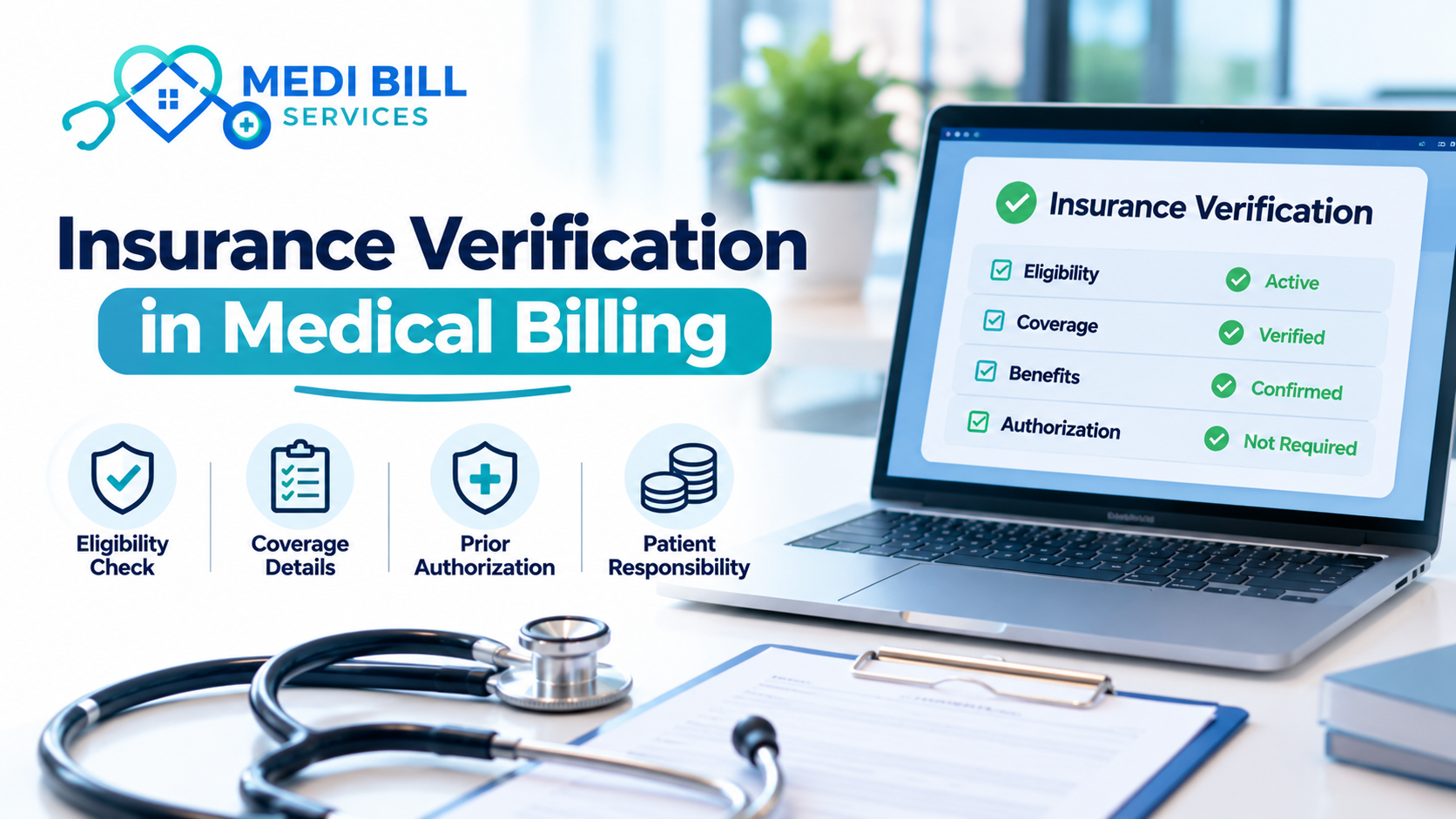
Insurance Verification in Medical Billing
Insurance verification is an important step in the medical billing process. Before healthcare services are provided, medical practices need to review a patient’s insurance information to understand their coverage, eligibility, and applicable requirements.
Incorrect insurance details or inactive coverage can create billing complications, claim denials, and payment delays. A consistent insurance verification process helps healthcare providers identify potential issues early and prepare more accurate claims.
In this guide, we will explain how insurance verification works, why it matters, common challenges, and best practices for improving the process.
What Is Insurance Verification in Medical Billing?
Insurance verification in medical billing is the process of checking a patient’s health insurance information to confirm coverage details and eligibility for healthcare services.
The process typically involves reviewing the patient’s insurance policy, checking whether coverage is active, and identifying relevant benefits, limitations, and authorization requirements.
Insurance verification helps billing teams collect accurate information before preparing and submitting claims.
However, verifying eligibility does not guarantee that an insurance company will pay a claim. Final reimbursement depends on the patient’s policy, medical necessity requirements, payer rules, provider agreements, and claim details.
Why Is Insurance Verification Important?
Accurate insurance verification supports a smoother billing process and helps healthcare practices identify potential problems before services are provided.
Reduces Avoidable Claim Denials
Claims may be denied because of inactive insurance coverage, incorrect policy information, or services that are not covered under a patient’s plan.
Checking insurance details in advance can help identify these issues before claim submission.
Improves Patient Information Accuracy
Incorrect policy numbers, patient names, dates of birth, or insurance details can affect claim processing.
Verification helps billing teams review and update important information before preparing claims.
Supports Better Financial Planning
Understanding insurance coverage and patient financial responsibilities helps practices communicate billing expectations more clearly.
It also helps administrative teams identify situations where additional payment information may be required.
Helps Identify Authorization Requirements
Some medical services require prior authorization or referrals from insurance companies.
Checking payer requirements before treatment can help practices identify these conditions and take the appropriate steps.
Improves the Patient Billing Experience
When insurance information is reviewed correctly, patients can receive clearer information about their coverage and potential financial responsibilities.
This can reduce confusion and help patients understand their billing arrangements.
What Information Is Checked During Insurance Verification?
The verification process involves reviewing several important details.
Patient Demographic Information
The patient’s name, date of birth, and other relevant identification details should match the information held by the insurance company.
Even small differences may create problems during claim processing.
Insurance Policy Information
Billing staff should review the insurance provider, member identification number, group number, and policy details where applicable.
These details help ensure that claims are directed to the appropriate payer.
Coverage Eligibility
The practice should check whether the patient’s insurance coverage is active for the relevant date of service.
Coverage status can change, so information should be verified according to the practice’s procedures.
Covered Services
Insurance plans may have different coverage rules for consultations, diagnostic tests, procedures, and specialty services.
Reviewing relevant benefits helps identify potential limitations before treatment.
Copayments and Deductibles
Depending on the insurance plan, patients may have financial responsibilities such as copayments, deductibles, or coinsurance.
Understanding these details can help practices communicate expected patient costs more accurately.
Prior Authorization and Referral Requirements
Some services may require approval from the insurance company or a referral from another healthcare provider.
The practice should identify applicable requirements and document authorization information when needed.
Network Status
Providers should check whether their relationship with the insurance network affects coverage and reimbursement.
Network status can influence patient financial responsibilities and claim processing.
Step-by-Step Insurance Verification Process
A structured verification workflow helps healthcare practices collect accurate information and reduce administrative complications.
Step 1: Collect Patient Information
Start by collecting the patient’s demographic details and insurance information during registration or appointment scheduling.
Request the relevant insurance card or other accepted policy information according to the practice’s procedures.
Step 2: Review Insurance Details
Check the policy number, member information, group number, payer name, and other required details.
Compare the information provided by the patient with the details available through the payer’s verification system.
Step 3: Check Coverage Eligibility
Confirm whether the insurance policy is active for the expected date of service.
If the policy is inactive or the information cannot be verified, follow the practice’s procedure for obtaining updated details.
Step 4: Review Benefits and Coverage
Check whether the planned service appears to fall within the patient’s insurance benefits.
Review relevant limitations, exclusions, deductibles, copayments, and coinsurance information.
Step 5: Identify Authorization Requirements
Determine whether the service requires prior authorization, a referral, or additional payer approval.
If authorization is required, follow the payer’s instructions and record the relevant information.
Step 6: Document Verification Results
Record the verification date, payer information, coverage details, and any important limitations or authorization requirements.
Maintaining clear records helps billing teams review information later if a claim requires investigation.
Step 7: Communicate With the Patient
Explain relevant coverage information and potential financial responsibilities in clear language.
Avoid presenting estimated benefits as guaranteed payment because the payer makes the final claim determination.
Step 8: Recheck Information When Necessary
Insurance information may change between appointments or during an ongoing treatment plan.
Practices should establish procedures for rechecking coverage when policies change or when a new service requires additional verification.
Common Insurance Verification Challenges
Healthcare practices may encounter several issues when verifying insurance information.
Incorrect Insurance Details
Patients may provide outdated insurance cards or incorrect policy information.
Solution: Request updated information and compare patient details with payer records before preparing claims.
Inactive Insurance Coverage
A patient’s policy may no longer be active on the date of service.
Solution: Check eligibility regularly and follow the practice’s procedure for handling inactive coverage.
Unclear Coverage Limitations
Some insurance plans include restrictions, exclusions, or service-specific requirements.
Solution: Review available benefit information and contact the payer when important details are unclear.
Missing Prior Authorization
A service may require authorization that has not been obtained.
Solution: Identify authorization requirements before providing the service whenever possible and maintain records of approvals.
Incorrect Patient Financial Estimates
If coverage information is misunderstood, patients may receive inaccurate estimates of their financial responsibilities.
Solution: Explain that eligibility and benefit information is not a guarantee of claim payment. Provide estimates carefully and clarify that final responsibility depends on payer processing.
Changing Insurance Policies
Patients may change insurance providers, plans, or coverage details.
Solution: Update records when patients report changes and verify the current policy before relevant services.
Best Practices for Accurate Insurance Verification
Healthcare providers can improve their verification workflows by following consistent procedures.
Verify Insurance Before Appointments
Whenever possible, check insurance information before the scheduled visit rather than waiting until the claim is prepared.
Early verification gives staff more time to identify missing information or coverage issues.
Use Reliable Verification Systems
Use appropriate payer portals, electronic eligibility tools, or other accepted verification channels.
Ensure that staff understand how to interpret the information provided by these systems.
Maintain Accurate Patient Records
Keep demographic and insurance information updated in the practice management system.
Establish a procedure for reviewing changes and correcting inaccurate records.
Document Every Verification
Record important verification details so that staff can understand what was checked and when.
Clear documentation can help when questions arise during claim processing.
Train Front Desk and Billing Staff
Employees involved in registration and billing should understand insurance terminology, eligibility checks, and authorization procedures.
Regular training helps improve consistency and reduce avoidable mistakes.
Establish a Follow-Up Process
If coverage information is unclear or unavailable, assign responsibility for resolving the issue.
Document outstanding questions and follow up according to the practice’s procedures.
Protect Patient Information
Insurance verification involves sensitive personal and financial information.
Use appropriate access controls, secure systems, staff training, and privacy procedures. Healthcare practices should follow the data protection requirements applicable to their location and operations.
How Insurance Verification Supports Revenue Cycle Management
Insurance verification is an important part of the healthcare revenue cycle.
It takes place early in the billing process and helps establish whether the available patient and insurance information is suitable for preparing claims.
When verification is performed consistently, healthcare practices may be better positioned to:
- Identify inactive insurance policies.
- Detect incorrect patient information.
- Understand relevant coverage limitations.
- Identify authorization requirements.
- Communicate patient financial responsibilities.
- Reduce certain preventable claim issues.
- Prepare more complete billing records.
Although verification cannot prevent every denial, it helps address potential problems before they move further through the revenue cycle.
How Medi Bill Services Can Support Healthcare Providers
Medi Bill Services provides medical billing-related support for healthcare providers seeking assistance with billing workflows and revenue cycle activities.
Depending on the services selected, practices may seek support with claim processing, billing administration, denial follow-up, and accounts receivable management.
Healthcare providers should confirm the available services and responsibilities before selecting a billing arrangement.
Explore the medical billing services page to learn more about available support. You can also visit the medical specialties page to review information relevant to different healthcare practices.
Conclusion
Insurance verification is an essential step in medical billing because it helps healthcare practices review patient coverage information before submitting claims.
Checking eligibility, reviewing benefits, identifying authorization requirements, and maintaining accurate records can help reduce certain billing problems and improve administrative workflows.
By following consistent verification procedures and communicating clearly with patients, healthcare providers can support more organized billing operations and effective revenue cycle management.
Frequently Asked Questions
What is insurance verification in medical billing?
Insurance verification is the process of checking a patient’s health insurance information to review coverage eligibility, benefits, policy details, and applicable requirements before healthcare services are billed.
Why is insurance verification important for healthcare providers?
It helps identify inactive coverage, incorrect policy information, authorization requirements, and potential patient financial responsibilities before claims are submitted.
When should insurance verification be performed?
Ideally, insurance verification should be completed before the scheduled appointment or service. Practices should also recheck information when a patient’s coverage changes or additional services require verification.
Does insurance verification guarantee claim payment?
No. Verification provides information about eligibility and benefits, but it does not guarantee reimbursement. Final payment depends on the policy, payer rules, documentation, medical necessity, and claim processing.
What information is required for insurance verification?
Common information includes the patient’s name, date of birth, insurance provider, member identification number, group number, coverage status, benefits, and any applicable authorization or referral requirements.